••
Ghanaian Political Landscape: President Mahama Proposes 'Accra Reset' Amid Rising Domestic Tensions and Global Legal Developments
•3 min read•11 sources
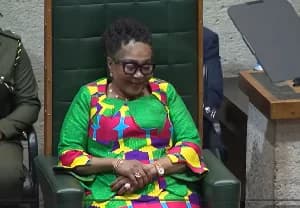
President John Dramani Mahama has intensified his call for African economic sovereignty and transformation during a high-profile state visit to Zambia. Addressing the Zambian National Assembly, Mahama introduced his 'Accra Reset Initiative,' a policy framework designed to stabilize Ghana’s economy by reducing the size of government and curbing inflation. During his address, which touched on the deep historical ties between Ghana and Zambia, Mahama highlighted the urgent need for African nations to maintain control over their natural resources while tackling the persistent challenges of youth unemployment. The visit also served as a platform for diplomatic outreach, with the President introducing First Lady Lordina Mahama to the assembly as part of his mission to foster deeper bilateral cooperation.
While the President projects a vision of stability abroad, Ghana faces significant domestic challenges in the security and labor sectors. In the Bawku enclave, a group of police officers has threatened to resign unless they are immediately transferred, citing escalating violence and a lack of adequate protection from the local population. Interior Minister Mohammed Mubarak Muntaka recently briefed Parliament on the crisis, advocating for the deployment of armored vehicles and more robust support for personnel on the front lines. Simultaneously, a coalition of university non-teaching unions has rejected a new retirement directive from the Ghana Tertiary Education Commission (GTEC). The unions have characterized the policy as 'arbitrary and discriminatory,' issuing a two-week ultimatum for its withdrawal to avoid a total shutdown of public universities.
Infrastructure and national identity also remain at the forefront of the country's political discourse. Greater Accra Regional Minister Linda Ocloo has ordered an immediate halt to a private development beneath the Flowerpot Interchange on Spintex Road, citing right-of-way violations and potential obstructions to public infrastructure. This intervention led to an emotional appeal from the developer, Georgina Opoku, who claims she invested heavily after receiving permits that have now been revoked. Meanwhile, a proposal to rename Kotoka International Airport to Accra International Airport has sparked a debate over Ghana's history. While the government aims to align the facility with modern democratic values, retired Maj-Gen Edwin Sam has defended the legacy of General Kotoka, arguing that his role in the 1966 coup was viewed as heroic by many at the time.
On the international front, legal accountability for high-profile figures continues to draw attention across the continent and beyond. In Zambia, the High Court has ordered Dalitso Lungu, son of former President Edgar Lungu, to surrender over $1.3 million in assets—including 79 vehicles and luxury properties—after he failed to prove their lawful acquisition. This drive for transparency mirrors ongoing scrutiny in the United States regarding former President Donald Trump. Recently surfaced FBI documents from 2006 suggest that Trump was aware of Jeffrey Epstein’s misconduct years before his arrest, allegedly telling a Florida police chief that 'everyone' knew of Epstein's behavior. These combined events underscore a global trend toward increased scrutiny of political figures and the legal implications of their past associations.
This story touches markets covered on Anansi Intelligence ↗.
Related topic
John Mahama: Latest News & Updates →More from politics
Continue exploring similar stories


