••
Emmanuel Macron to Join President Mahama for Reparations Summit in Accra as Regional and Global Tensions Mount
•3 min read•19 sources
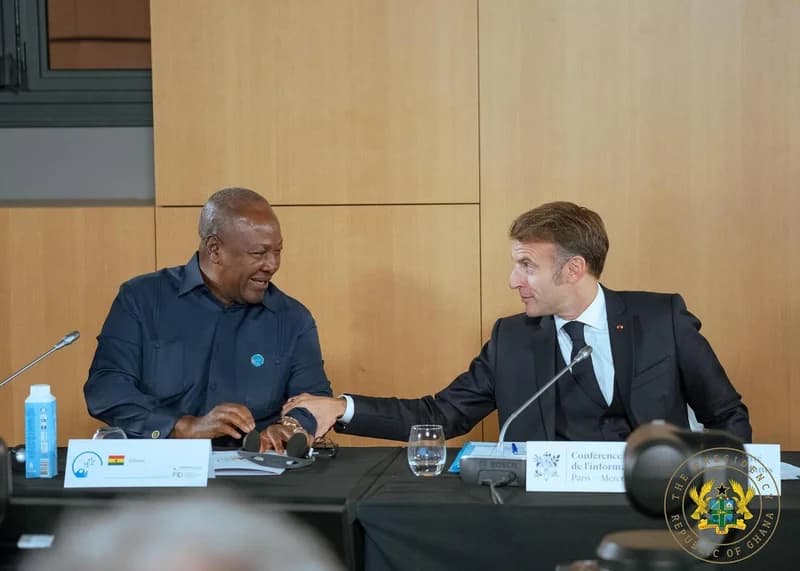
Ghana is set to become the epicenter of the global reparations movement as French President Emmanuel Macron confirms his participation in the Next Steps Conference on Reparatory Justice, scheduled for June 17–19, 2026, in Accra. Hosted by former President John Dramani Mahama in his capacity as the African Union Champion for Reparations, the summit marks a significant diplomatic shift in how European powers address the legacy of the transatlantic enslavement of Africans. The event follows a Ghana-led United Nations resolution recognizing enslavement as a crime against humanity and aims to transition from symbolic apologies to actionable policies, including the return of cultural artifacts and formal reparations. A special Juneteenth commemoration is also planned at Christiansborg Castle to honor the victims of colonial-era exploitation.
While West Africa prepares for this landmark diplomatic engagement, Southern Africa is grappling with a severe breakdown in regional relations. The Nigerian government has expressed profound dissatisfaction with South Africa’s handling of renewed xenophobic attacks against its nationals, with Foreign Affairs Minister Amb. Bianca Odumegwu-Ojukwu warning of retaliatory diplomatic measures and the potential suspension of business permits for South African companies. Nigeria has already approved evacuation flights for over 1,000 citizens wishing to return home amid reports of harassment and property damage. Concurrently, South Africa’s Department of International Relations and Cooperation (DIRCO) has announced a controversial plan to charge foreign governments for the deportation of their undocumented nationals, aiming to recoup costs after deporting over 100,000 individuals in the last two years.
On the global stage, these developments are unfolding against a backdrop of extreme volatility in the Middle East. Israeli forces have intensified military operations in southern Lebanon targeting Hezbollah-linked facilities, even as Iran proposed a conditional suspension of hostilities. The conflict has seen direct missile and drone exchanges between Israel and Iran, marking a significant shift in regional military doctrine. Amid these tensions, a U.S. Army AH-64 Apache helicopter crashed near the Strait of Hormuz during a patrol off the coast of Oman. While the two crew members were successfully rescued by a drone boat, the incident underscores the precarious security situation in one of the world’s most critical maritime corridors.
These interconnected events highlight a world in transition, where historical accountability is being sought alongside modern geopolitical friction. As President Macron prepares to address the Accra summit, the success of his engagement may depend on the ability of international leaders to reconcile differing views on historical liability. Simultaneously, the escalating tensions between Nigeria and South Africa, coupled with the fragile state of Middle Eastern peace talks, present a complex challenge for global stability. The outcomes of the June 2026 summit in Accra could serve as a blueprint for North-South diplomacy, provided that regional conflicts do not further erode the cooperative spirit required for such transformative justice.
This story touches markets covered on Anansi Intelligence ↗.
Related topic
John Mahama: Latest News & Updates →More from politics
Continue exploring similar stories


