••
Ghanaian Political Landscape Shifts as Party Leaders Clarify Roles and Electoral Reforms Gain Momentum
•3 min read•11 sources
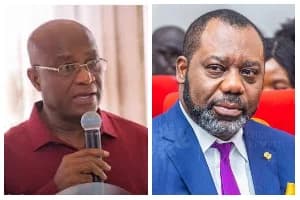
The Ghanaian political landscape is witnessing a series of internal realignments and procedural debates as major parties prepare for upcoming leadership transitions and national elections. Within the New Patriotic Party (NPP), former Majority Leader Osei Kyei-Mensah-Bonsu has moved to quell rumors of a rivalry with Dr. Matthew Opoku Prempeh (NAPO), the party’s running mate for the 2024 elections. Kyei-Mensah-Bonsu clarified that he has not been competing for the position, revealing instead that he was instrumental in NAPO’s selection, having recommended him to Dr. Mahamudu Bawumia as early as 2022. He emphasized that the choice of a running mate remains the sole prerogative of the presidential candidate, urging party members to focus on unity rather than internal competition.
Parallel to these developments in the NPP, the National Democratic Congress (NDC) is seeing a surge in activity surrounding its National Chairmanship race. Prominent figures including Alhaji Said Sinare, Edwin Nii Lante Vanderpuye, and Chief Sofo Azorka are being tipped as potential contenders. Political analysts suggest that Alhaji Said Sinare is currently a frontrunner due to his extensive organizational experience and deep-rooted relationships within the party. This internal positioning comes as Mussa Dankwah, Executive Director of Global InfoAnalytics, defends his firm’s polling against criticisms from NDC members. Dankwah argues that credible polling "sanitizes" the electoral process by providing aspirants with a realistic view of their chances, citing historical examples where a lack of data led to overcrowded and chaotic primary fields.
Broader reforms to Ghana’s democratic processes are also being championed in the legal and legislative spheres. The AfriKan Continental Union Consult (ACUC) has thrown its support behind a Supreme Court challenge initiated by Professor Kwabena Frimpong-Boateng and Dr. Nyaho Nyaho-Tamakloe, which seeks to abolish the restrictive delegate system in favor of universal voting rights for all registered party members. Supporters of the suit argue that the current system fosters political monetization and limits genuine democratic participation. Simultaneously, the Human Sexual Rights and Family Values Bill remains a point of contention; MP John Ntim Fordjour has raised concerns that recent amendments created loopholes for advocacy, while a procedural dispute has emerged over whether Speaker Alban Bagbin correctly followed parliamentary standing orders during the bill’s passage.
Amidst these partisan maneuvers, the Presidency has sought to reinforce the independence of state institutions. Deputy Presidential Spokesperson Shamima Muslim recently refuted claims that the executive personally directs arrests, asserting that security agencies operate autonomously within the rule of law. As Ghana moves closer to its next electoral cycle, these debates over leadership selection, polling integrity, and legislative procedure underscore a period of intense scrutiny and transformation within the nation’s democratic architecture.
This story touches markets covered on Anansi Intelligence ↗.
Related topic
NDC (National Democratic Congress): Latest News →More from politics
Continue exploring similar stories


