••
Ken Kuranchie Challenges Presidential Term Limits in Supreme Court Amid Debates Over President Mahama’s Future Eligibility
•3 min read•15 sources
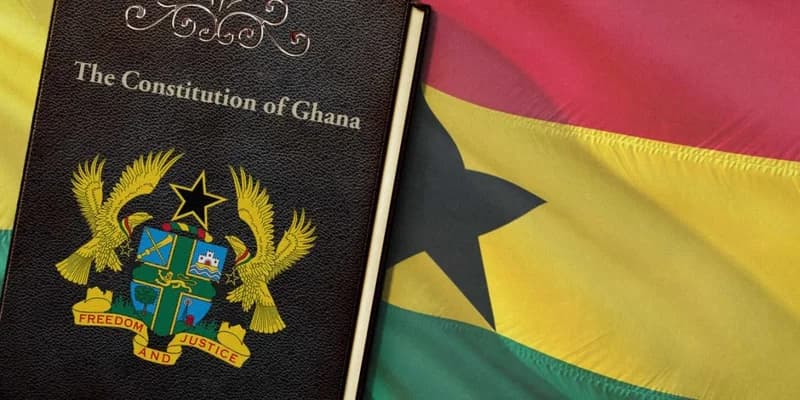
Private legal practitioner Ken Kuranchie has petitioned the Supreme Court to clarify what he describes as a "genuine ambiguity" within the 1992 Constitution regarding presidential term limits. The legal challenge focuses on Article 66(2) and seeks to determine whether a president who serves non-consecutive terms is subject to the same limitations as one who serves two terms in succession. While Kuranchie maintains that his case is intended to seek constitutional clarity rather than specifically advocating for a third term for President John Mahama, the outcome of the petition carries significant implications for the President’s eligibility to contest the 2028 elections. Kuranchie argues that the Constitution should be interpreted holistically, suggesting that a president’s eligibility might reset after leaving office following a single term.
The New Patriotic Party (NPP) has reacted strongly to the legal action, with National Organiser Henry Nana Boakye warning that a reinterpretation of the two-term limit could lead to political instability and democratic backsliding. Boakye characterized the debate as a dangerous precedent that might allow a president to rule indefinitely by alternating terms. He further accused President Mahama of holding a "deceptive" stance on the matter, suggesting that the ongoing legal discussions could be politically motivated to circumvent the established constitutional order. The NPP maintains that the original intent of the 1992 Constitution is clear: no individual should serve as president for more than two terms, regardless of whether they are served consecutively.
Representing the National Democratic Congress (NDC), former Tamale Central MP Inusah Fuseini reaffirmed that the party and President John Mahama remain officially committed to the constitutional two-term limit. While acknowledging that there are diverse opinions within the party and the legal community, Fuseini emphasized that the NDC respects the existing framework of the 1992 Constitution. However, he noted that the party would look to the Supreme Court’s eventual interpretation to provide a final resolution on how non-consecutive terms should be treated under the law. This position seeks to balance the party's respect for the law with the ongoing judicial inquiry into the specifics of eligibility.
Academic and legal experts have also entered the fray, with Professor Kwadwo Appiagyei-Atua of the University of Ghana arguing that the Supreme Court may not even need to entertain the petitions. Professor Appiagyei-Atua contends that the constitutional language is already unambiguous, asserting that serving two terms concludes an individual's opportunity to hold the presidency for life, irrespective of the interval between those terms. As the Supreme Court prepares to deliberate on the matter, the case has sparked a broader national conversation about the resilience of Ghana's democratic institutions and the importance of maintaining clear, enforceable limits on executive power to ensure long-term political stability.
This story touches markets covered on Anansi Intelligence ↗.
Related topic
NDC (National Democratic Congress): Latest News →More from politics
Continue exploring similar stories


