••
KNUST and Local Leaders Spearhead Health Initiatives as Kidney Patients Plead for Dialysis Equipment
•3 min read•5 sources
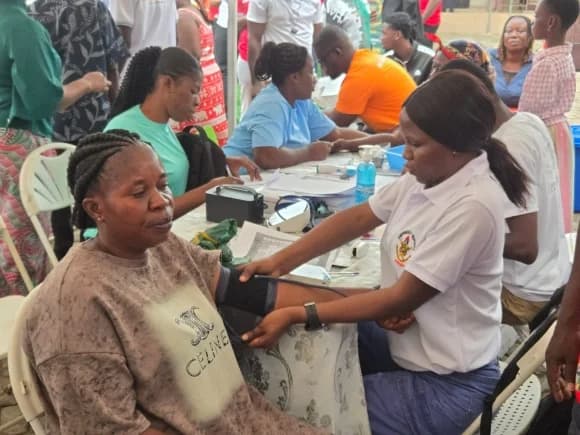
Ghana's health sector is currently navigating a period of intensive community-level engagement alongside mounting pressure on specialized medical infrastructure. Recent activities across the country highlight a shift toward preventive care and localized support, driven by academic institutions, religious organizations, and community leaders. However, these efforts are contrasted by urgent calls for intervention in critical care services, particularly for kidney patients in the Central Region who face life-threatening shortages in dialysis capacity.
The Kwame Nkrumah University of Science and Technology (KNUST) recently spearheaded a major medical outreach in Anwomaso to commemorate its 75th anniversary. Led by the College of Health Sciences, the initiative provided free screenings for prevalent conditions like hypertension and diabetes. Professor Francis Kemausuor, representing Vice-Chancellor Professor Christian Agyare, emphasized the university's commitment to a "One Health" approach, which integrates human health, animal health, and environmental safety. Similarly, the Global Peace Christian Centre (GPCC) has stepped in to support the Abokobi Polyclinic in the Ga East Municipality. The church donated essential supplies, including blood pressure monitors and detergents, while pledging a long-term partnership to conduct regular health screenings for the local population.
In the Western Region, the fight against social health challenges has gained momentum in the Prestea Huni Valley Municipality. Member of Parliament Robert Wisdom Cudjoe and Municipal Chief Executive Matthew Ayeh recently convened a community durbar to address the growing menace of youth drug abuse. MCE Matthew Ayeh announced a crackdown on illegal "ghettos" and sought to dismantle dangerous myths that claim drugs can enhance intellectual capacity. The leaders called for a multisectoral response, urging parents and educators to serve as ambassadors in a coordinated effort to protect the youth from the devastating effects of addiction.
Despite these positive community interventions, the Cape Coast Teaching Hospital (CCTH) is facing a dire equipment shortage that threatens the lives of kidney patients. The Forum for Kidney Patients Association Ghana has reported that the facility, which is the only public dialysis center in the Central Region, currently operates with only five functioning machines for over 100 patients. This severe limitation has forced medical staff to reduce treatment sessions from the recommended four hours to just two. Dr. Samuel Doughan and association president Baffour Kojo Ahinkra have appealed for immediate government and private sector support to provide new machines and consumables, warning that the current situation is unsustainable and puts patients at high risk of complications.
These collective developments suggest that while Ghana is making significant strides in decentralized health education and primary screenings, a critical gap remains in the financing of high-end medical equipment. The sustainability of community health programs, such as those initiated by KNUST and local leaders, will depend on whether they are matched by the necessary infrastructure to treat the chronic conditions discovered during such outreaches. Addressing the dialysis crisis in Cape Coast remains a pivotal test for the regional health directorate and the Ministry of Health.
This story touches markets covered on Anansi Intelligence ↗.
More from health
Continue exploring similar stories


