••
KMA Targets Shop Debtors Amid Kumasi Market Delays as Gbani Miners Protest Shutdown Order
•3 min read•6 sources
The Kumasi Metropolitan Assembly (KMA) and the Ministry of Local Government are grappling with significant financial and logistical hurdles in the redevelopment of the Kumasi Central Market. While the KMA is actively seeking funding to restart the stalled ‐248 million Phase II project, Local Government Minister Mahama Ayariga has revealed a troubling trend of price inflation. Some traders are reportedly reselling Phase I shops for as much as GH%120,000—nearly five times the original GH%25,000 premium set by the government. This secondary market has emerged even as the state struggles to collect the necessary revenue to fund subsequent phases of the development.
Mayor Richard Ofori Agyemang Boadi reported that the KMA has generated only GH%89 million from Phase I since its 2018 opening, a figure representing less than half of the expected premium payments. The Mayor warned that this financial shortfall has directly impacted the progress of Phase II, which is intended to provide over 3,760 counter shops and 6,000 lockable units. With the project currently facing significant delays despite its 2018 contract signing, the KMA has issued a December deadline for traders to clear their outstanding debts or risk losing their shops. Construction on the remaining segments is currently projected to resume in October 2026.
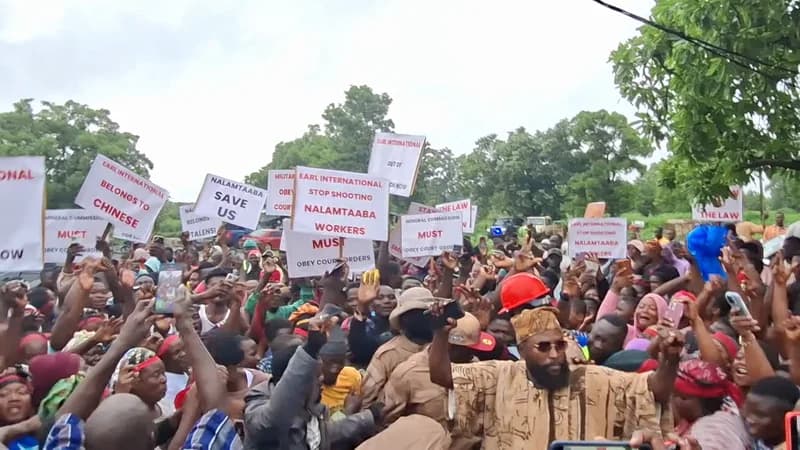
Simultaneously, the mining sector in the Upper East Region is facing its own crisis as the Minerals Commission has ordered the shutdown of the Nalamtaaba Mining Enterprise in Gbani. Over a thousand workers and traders in the Talensi District are urging the Commission to reverse the directive, citing the enterprise as a vital economic lifeline for the community since its registration in 2014. At a recent news conference, community members expressed fears that a prolonged shutdown would lead to widespread joblessness and poverty in a region heavily dependent on small-scale mining.
Management of the Nalamtaaba Mining Enterprise has condemned the shutdown order as unfair, alleging that the Minerals Commission may be attempting to transfer the concession to foreign interests. Protesters highlighted these concerns with chants of "No Nalamtaaba, No Shaanxi," reflecting local suspicions regarding the influence of foreign mining entities. The enterprise maintains that it has remained law-abiding for a decade and is calling for government intervention to protect local jobs over external commercial interests.
These concurrent developments in Kumasi and Gbani underscore the growing tension between regulatory enforcement and local economic stability. For the Mahama administration, the challenge lies in balancing the need for fiscal discipline in infrastructure projects with the preservation of livelihoods for thousands of traders and miners. As the KMA moves toward its December debt-collection deadline and the Minerals Commission faces mounting pressure in the Talensi District, the outcomes will serve as a critical barometer for the government's approach to local business management.
