••
John Boadu and Justin Kodua Frimpong Lead Early NPP 2026 Polls as NDC Opens Nominations
•3 min read•14 sources
Ghana's political landscape is shifting toward internal reorganization as both major parties prepare for critical leadership transitions ahead of future electoral cycles. A recent poll by Africa Policy Lens (APL), conducted between July and August 2026, has identified early frontrunners for the New Patriotic Party (NPP) national executive race. Former General Secretary John Boadu currently leads the contest for National Chairman with 38.6% support, though the race remains highly competitive with over 30% of delegates undecided. Meanwhile, incumbent General Secretary Justin Kodua Frimpong (JFK) holds a commanding lead of 61.4% to retain his position. Other notable frontrunners include Mavis Hawa Koomson for Women’s Organiser and Dennis Miracles Aboagye, who holds a significant 76.5% lead for the role of National Communication Director.
Simultaneously, the National Democratic Congress (NDC) has officially opened nominations for its 2026 constituency executive elections, effective September 15. The party has mandated that all nomination payments be processed online and emphasized that candidates must be in good standing with their dues. Amidst these internal races, NDC Chairman Johnson Asiedu Nketiah has stressed the necessity of grooming leaders well before they attain power, arguing that a party's internal values directly shape its eventual governance character. This call for institutional integrity is echoed at the grassroots level by aspirants like John A. Akutam, who is seeking the Deputy Regional Secretary position in the Upper East Region under the banner of being a "new voice for the voiceless."
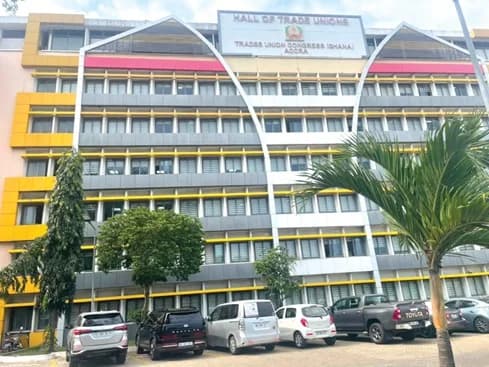
Beyond internal party dynamics, broader governance reforms and ethical concerns have taken center stage in the national dialogue. The Trades Union Congress (TUC) has formally declared its opposition to proposed extensions of the presidential tenure from four to five years, warning that such a move could prolong the impact of misgovernance without corresponding structural reforms. These concerns align with findings from the "Democracy Not for Sale" project in Koforidua, where surveys revealed that nearly 99% of participants are aware of vote-buying practices. Stakeholders at the dialogue called for enhanced powers for the Electoral Commission and improved civic education to ensure that merit and ideas, rather than financial influence, dictate political outcomes.
On the ground, Members of Parliament are focusing on constituent engagement and developmental projects to solidify their mandates. In Walewale, NPP MP Dr. Mahama Tiah Abdul-Kabiru has used his first 20 months in office to launch a GH₵215;400,000 scholarship fund and the GH₵215;1 million "Faako" Fund for women entrepreneurs, despite the NPP no longer holding national power. In Ajumako Enyan Essiam, Finance Minister and NDC MP Dr. Cassiel Ato Forson recently expressed gratitude to his constituents for 18 years of support, reaffirming his commitment to balancing his ministerial duties under President John Mahama's administration with the local needs of his district. These individual efforts reflect the broader push for "competence over wealth" that remains a recurring theme across the political spectrum as parties look toward 2026.
Related topic
NDC (National Democratic Congress): Latest News →

