••
Kwame Jantuah and NDC’s Ewura Adams Karim Advocate for Infrastructure Investment to Reform Double-Track System
•3 min read•12 sources
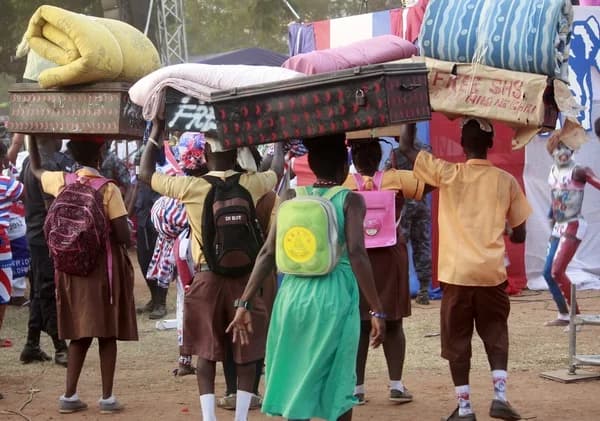
As Ghana continues to navigate the complexities of the Free Senior High School (SHS) policy, prominent political voices and education experts are calling for a shift from debating abolition to focusing on infrastructure expansion. Kwame Jantuah of the Convention People’s Party (CPP) and Ewura Adams Karim of the National Democratic Congress (NDC) have both emphasized that the Double-Track system, though controversial, should be improved rather than scrapped. This consensus emerges amidst a backdrop of public concern regarding educational quality and the ongoing demand for more robust facilities to accommodate the surge in student enrollment following the program's inception.
Speaking on GTV’s Breakfast Show, Kwame Jantuah argued that the Double-Track system was a necessary temporary response to the infrastructure deficit caused by the Free SHS rollout in 2018. Rather than ending the program, Jantuah suggested that the government should enhance operational efficiencies and actively court private-sector involvement. He highlighted the potential for corporate giants like MTN to partner with the state in facility development, similar to successful collaborations seen in the National Science and Maths Quiz. Jantuah also stressed that the boarding school experience remains a critical component of student character development that must be preserved through better resourcing.
Complementing this perspective, NDC Communications Team member Ewura Adams Karim defended the fundamental right of every Ghanaian student to free education. While the NDC supports the initiative, Karim pointed out that current implementation flaws, particularly the Double-Track system's impact on teaching quality, must be addressed. To alleviate the pressure on the nation’s most popular institutions, he proposed upgrading Category B schools to Category A status. Karim further advocated for a significant increase in investment toward Science, Technology, Engineering, and Mathematics (STEM) education and the completion of existing projects like E-blocks to ensure that expanded access does not undermine academic standards.
The debate is further complicated by public sentiment, as evidenced by a recent Institute of Economic Affairs (IEA) poll which found that 64.7% of Ghanaians believe the Double-Track system has negatively impacted education quality. However, Dr. Peter Anti, Executive Director of the Institute for Education Studies (IFEST), has questioned the scientific validity of such polls. He noted that while parental perceptions are influenced by personal experience, they do not substitute for a rigorous impact analysis. Dr. Anti called for comprehensive, data-driven studies to determine the true effect of the system on educational outcomes before major policy shifts are enacted by the administration of President John Mahama.
The prevailing sentiment among these stakeholders suggests that the future of Ghana’s secondary education depends on a dual approach: maintaining the accessibility of Free SHS while aggressively closing the infrastructure gap. By moving beyond political rhetoric and focusing on physical expansion and scientific evaluation, the government can ensure that the promise of free education is matched by the reality of high-quality learning environments. The call for private sector participation and the upgrading of less-endowed schools provide a potential roadmap for stabilizing the sector in the years ahead.
Related topic
NDC (National Democratic Congress): Latest News →