••
ISSER Study Reveals Massive GH¢556 Return on Sanitation Investment as Ghana’s Waste Management Industry Gains Momentum
•3 min read•5 sources
A groundbreaking policy brief by the Institute of Statistical, Social and Economic Research (ISSER) has revealed that strategic investment in Ghana’s sanitation and waste management sector could yield an extraordinary return of GH¢556 for every GH¢1 invested. The report positions sanitation not merely as a public service or an environmental obligation, but as a high-return economic engine capable of driving significant growth. By aligning national spending with lower-middle-income country benchmarks, Ghana could transform its current waste challenges into a multibillion-cedi economic windfall, particularly as the nation grapples with the recurring impacts of floods and public health crises.
The ISSER study highlights a stark disparity in current expenditure, noting that Ghana currently spends an average of GH¢38.78 per tonne on waste management. To unlock the projected benefits, the report advocates for increasing this investment to GH¢1,028 per tonne, a figure that matches the average for comparable developing economies. Such a shift would likely yield GH¢180 in returns at current levels, but tripling the investment could result in total economic gains of GH¢58.1 billion by 2025. By 2032, these benefits are projected to climb to GH¢67.2 billion, driven largely by massive savings in healthcare costs and enhanced labor productivity.
Beyond the fiscal figures, the impact on public health and human capital is profound. ISSER forecasts that improved sanitation infrastructure would reduce sanitation-related morbidity by 97.4% and decrease associated deaths by 81%. This health transformation is a critical component of the economic model, as it ensures a healthier workforce and reduces the burden on the national healthcare system. The report emphasizes that treating sanitation as a vital economic investment rather than a recurring expense is essential for fostering long-term resilience and job creation within the environmental sector.
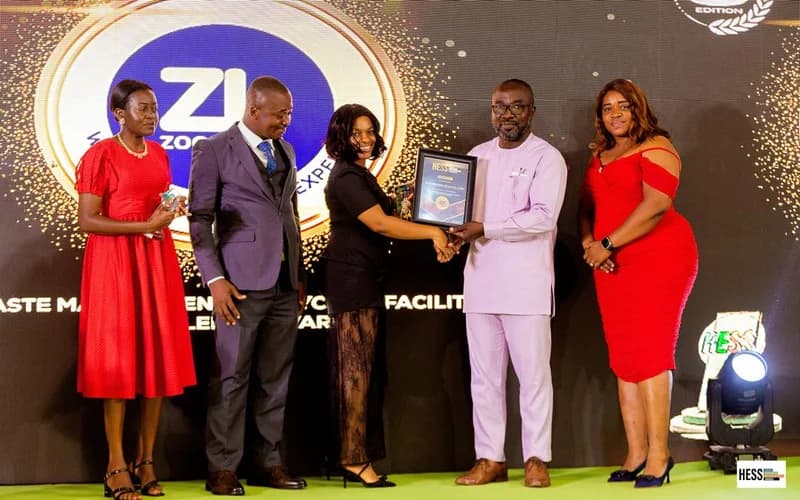
Evidence of the industry’s capacity for innovation was further highlighted at the 8th edition of the HESS (Health, Environment, Safety, and Security) Awards, where Zoomlion Ghana Ltd secured two major honors: the Waste Management & Recycling Facility Excellence Award and the Waste Management Innovation Award. These accolades underscore the private sector's readiness to implement the high-level strategies proposed by ISSER. Zoomlion’s Operations Manager, Emil Amoah, noted that these awards reflect a dedication to turning waste into valuable resources, reinforcing the idea that innovative waste management is central to meeting Ghana’s national development goals.
Ultimately, the convergence of academic research and corporate excellence points toward a clear path for Ghana’s economic policy. Strategic financing in sanitation is no longer just an environmental necessity but a core economic strategy to mitigate the damage caused by flooding, improve the quality of life for citizens, and stimulate sustainable industrial growth. As the government and private stakeholders consider future infrastructure projects, the ISSER report serves as a compelling business case for prioritizing the waste management value chain as a pillar of Ghana’s macroeconomic stability.
This story touches markets covered on Anansi Intelligence ↗.
Live rates
Dollar to cedi rate →More from business
Continue exploring similar stories


