••
University of Ghana’s Prof. Isaac Wiafe Calls for Agile AI Curriculum Approval and Local Data Infrastructure to Secure Ghana’s Digital Sovereignty
•2 min read•8 sources
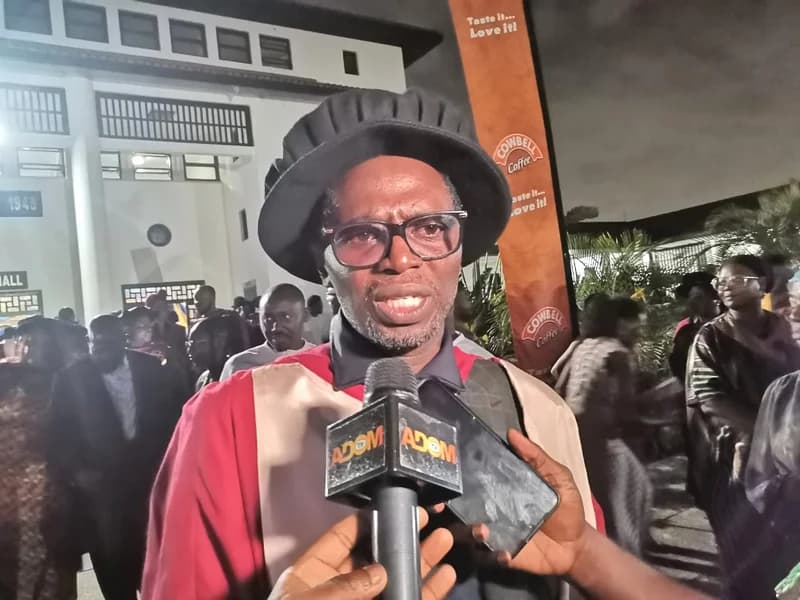
Professor Isaac Wiafe, a prominent computer scientist at the University of Ghana, has issued a sharp critique of the current barriers hindering the nation’s Artificial Intelligence (AI) progress. Speaking at an inaugural lecture in Accra, Prof. Wiafe highlighted that systemic delays in the approval of AI-related curricula and a lack of local-language data infrastructure are stifling the effectiveness of Ghana’s National AI Strategy. He warned that without urgent reform, the country risks becoming digitally dependent on external powers, which could lead to the marginalization of indigenous knowledge and the homogenization of Ghanaian culture through foreign-biased algorithms.
A primary concern raised by Prof. Wiafe is the bureaucratic bottleneck at the Ghana Tertiary Education Commission (GTEC). He lamented that the slow pace of curriculum approval often results in academic programs becoming obsolete before they are even implemented in classrooms, given the lightning speed of global technological advancement. To combat this, he urged GTEC to adopt more agile quality assurance mechanisms that can keep pace with the evolution of AI. Prof. Wiafe emphasized that universities must take a more proactive role in shaping AI discussions to ensure that education remains relevant and prepares students for a fast-changing global landscape.
Beyond academic structures, the lecture addressed the critical need for "local content" within Ghana’s technological ecosystem. Prof. Wiafe pointed out that the current National AI Strategy lacks sufficient emphasis on local-language data, which is essential for making AI tools useful in vital sectors such as health, education, and agriculture. He advocated for a government-backed local-language policy to support research institutions in building robust data infrastructures. By prioritizing datasets that reflect Ghanaian languages and cultural realities, the nation can ensure that AI developments are inclusive and serve the specific needs of its citizens rather than relying solely on foreign datasets and priorities.
Highlighting active efforts to bridge this gap, the Professor noted the University of Ghana’s partnership with Google Research Africa on ‘Project Euphonia,’ an initiative aimed at improving speech recognition for diverse local languages. Vice-Chancellor Professor Nana Aba Appiah Amfo commended these contributions, noting their alignment with local socio-economic realities. Prof. Wiafe concluded by calling for a human-centered transformation of AI models that prioritizes societal wellbeing and cultural preservation. Achieving technological sovereignty, he argued, requires a collective effort to build a resilient, locally-grounded AI ecosystem that safeguards Ghana’s digital future.
This story touches markets covered on Anansi Intelligence ↗.
More from education
Continue exploring similar stories


