••
Education Minister Haruna Iddrisu and MP Eric Agbana Drive Vocational Reforms and Youth Apprenticeships
•2 min read•5 sources
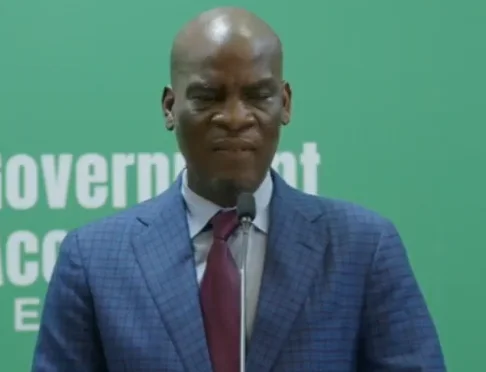
The Government of Ghana, led by Education Minister Haruna Iddrisu, has announced a comprehensive reform of the Technical and Vocational Education and Training (TVET) sector to align with the demands of a modern job market. These reforms, detailed during the Government Accountability Series in early 2026, focus on integrating digital and soft skills with traditional practical trade capabilities. The initiative aims to develop a highly skilled workforce capable of supporting a growing 24-hour manufacturing economy, ensuring that graduates are prepared for the evolving needs of industry and commerce.
Central to this national strategy is a significant investment in infrastructure and the promotion of Competency-Based Training (CBT). Minister Iddrisu revealed that two regional TVET Centres of Excellence are currently under construction in Salaga and Kumasi to foster innovation and provide state-of-the-art learning environments. To bridge the gap between theoretical classroom instruction and real-world application, the Ministry has implemented Workplace Experience Learning (WEL). This program is supported by strategic collaborations with 1,820 enterprises across various sectors, offering students vital practical training opportunities and enhancing their overall employability.
Complementing these national policy shifts are localized efforts to empower youth at the grassroots level. In the Ketu North constituency, Member of Parliament Eric Edem Agbana has launched a major phase of the Ketu North Skills and Apprenticeship Programme (KN-SAP). The initiative recently saw the distribution of essential start-up tools, including sewing machines and hairdryers, to 525 beneficiaries who successfully completed three months of intensive training. Beyond equipment, the program covers apprenticeship fees and provides direct cash support, aiming to remove financial barriers to self-employment and entrepreneurship.
These combined efforts at both the ministerial and constituency levels represent a dual-track approach to tackling youth unemployment in Ghana. While the central government focuses on systemic reforms and large-scale infrastructure, local representatives like Mr. Agbana are ensuring that trained apprentices have the physical resources necessary to establish their own businesses. Together, these initiatives seek to transform the image of vocational education, positioning it as a first-choice pathway for economic independence and national industrial growth.
This story touches markets covered on Anansi Intelligence ↗.
More from education
Continue exploring similar stories


