••
Humpback Whale 'Supergroups' Surge Off South African Coast Decades After Whaling Ban
•2 min read•2 sources
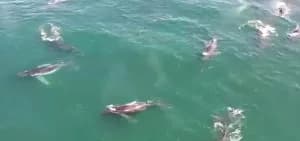
Off the coast of South Africa, a breathtaking marine phenomenon is taking hold as massive "supergroups" of humpback whales are being sighted with increasing frequency. These extraordinary gatherings, which occur primarily between the months of June and November, represent a dramatic shift in the behavior and population dynamics of these marine giants. Occurring nearly 50 years after the international ban on commercial whaling, the emergence of these large clusters serves as a powerful testament to the resilience of the species and the long-term impact of global conservation efforts.
Traditionally, humpback whales are known to travel and feed in small, intimate pods. However, researchers and observers are now witnessing a departure from this historical norm, with dozens or even hundreds of whales congregating in concentrated areas. This behavioral evolution marks a significant milestone in marine biology, suggesting that the population has reached a density that allows for such massive social and feeding interactions. The presence of these supergroups provides a unique opportunity for scientists to study whale communication and social structures on a scale that was previously impossible during the height of the whaling era.
The timing of these sightings coincides with the whales' annual migration patterns along the South African coastline. From the winter months through late spring, the nutrient-rich waters serve as a vital corridor for the whales as they move through the region. The fact that these supergroups are becoming a more common fixture during this seasonal window suggests that the South African maritime environment continues to offer the necessary resources to sustain a growing and thriving population. This trend not only highlights the health of the local ecosystem but also underscores South Africa's role as a premier global destination for marine observation and research.
Looking forward, the continued rise of humpback whale supergroups poses new questions for marine conservationists and policy-makers. While the recovery of the species is a cause for celebration, it also necessitates renewed vigilance in protecting migratory routes from modern threats such as ship strikes and industrial noise pollution. As these massive groups become a regular seasonal occurrence, they will likely drive increased interest in eco-tourism, providing a clear economic incentive to maintain the pristine nature of South Africa’s coastal waters for generations to come.