••
Education Minister Haruna Iddrisu Announces Coding and AI Integration for Ghana's Basic School Curriculum
•2 min read•4 sources
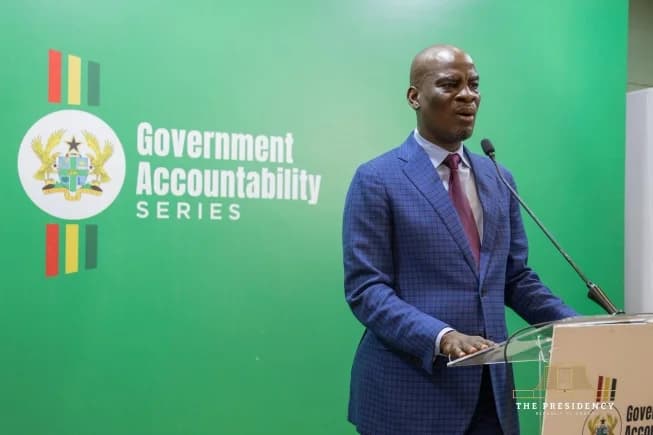
The Government of Ghana is set to transform the foundational stages of the nation's education system by introducing coding, artificial intelligence (AI), and electronic subjects into the basic school curriculum. Education Minister Haruna Iddrisu announced that the revised curriculum, which spans from Kindergarten (KG) to Junior High School (JHS), aims to equip students with critical digital skills and technical proficiency from an early age. This initiative is a central pillar of a broader strategy to enhance Science, Technology, Engineering, and Mathematics (STEM) education, fostering literacy and critical thinking to prepare the next generation for a rapidly evolving digital economy.
The revised curriculum, developed by the National Curriculum Review Agency (NACA), marks a significant shift in government resource allocation. Minister Iddrisu noted that past investments often focused heavily on secondary education at the expense of foundational learning. The new framework seeks to rectify this by integrating Technical and Vocational Education and Training (TVET), ethics, and electronics into the early years of schooling. By embedding these subjects into the KG-JHS cycle, the government intends to provide a more practical and technology-driven education that addresses the demands of modern industry.
Following its development, the curriculum was scheduled for presentation to the Ministry of Education in late July 2026 for subsequent submission to the President and Parliament. Beyond academic reforms, the Ministry is also addressing social barriers to education; as part of a holistic support system, the government has distributed 12.2 million sanitary pads to approximately 2.5 million female students across the country. While the curriculum framework is nearing final approval, specific details regarding the comprehensive training of teachers and a definitive rollout timeline for the new subjects are expected to be announced in the coming months.
Complementing these educational reforms, Deputy Minister Mohammed Adams Sukparu has emphasized the necessity of a collaborative approach to sustain Ghana’s digital growth. Speaking at the 2026 E-Learning Awareness Week at the Kwame Nkrumah University of Science and Technology (KNUST), Sukparu urged for stronger synergy between academia, industry, and government. He highlighted that while the new curriculum provides the skills base, the ethical deployment of AI and continued investment in digital infrastructure are vital for national development. This multi-sectoral focus ensures that the integration of technology in schools aligns with the broader goal of building a robust and inclusive digital economy.
This story touches markets covered on Anansi Intelligence ↗.
More from education
Continue exploring similar stories


