••
Fatal Helicopter Collision and Wildfires Ravage Greece as UK Crews Secure Nuclear Plant Site
•3 min read•12 sources
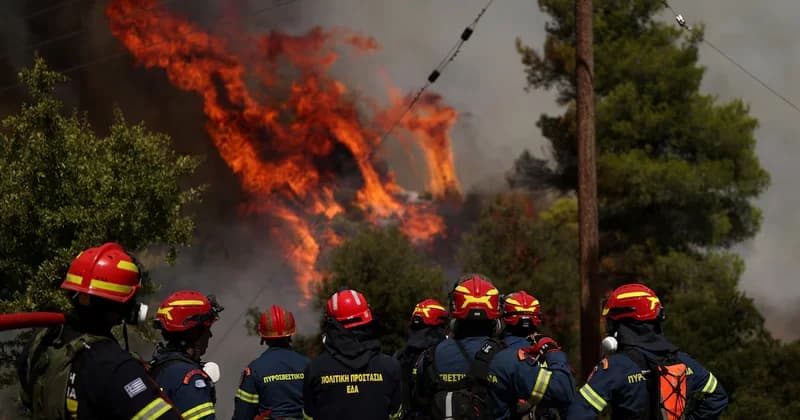
Firefighting efforts across Europe reached a critical point this week as multiple nations battled devastating wildfires exacerbated by extreme heat and drought. In Greece, the crisis turned fatal when two helicopters collided mid-air while combating a large blaze, claiming two lives. Meanwhile, in the United Kingdom, emergency crews have managed to stabilize a significant wildfire burning near the Sizewell B nuclear power station in Suffolk. While conditions have begun to improve in parts of France and Spain, the broader Mediterranean region remains on high alert as fire crews face "titanic" challenges fueled by climate change.
The most tragic development occurred approximately 65 kilometers west of Athens, where two Bell helicopters collided while attempting to contain a fire on the Attica-Boeotia border. The accident resulted in the deaths of a Danish pilot and a Greek fire service liaison officer after one helicopter's rotor struck the other, sending both into a ravine. A British pilot and another Greek coordinator miraculously survived the crash with minor injuries. In the wake of the tragedy, Greek Prime Minister Kyriakos Mitsotakis expressed his deep condolences, and all Bell helicopters in the country have been grounded pending an investigation. The incident underscores the extreme risks faced by the over 500 firefighters currently deployed across Greece, including on the island of Crete, where strong winds have forced further evacuations.
In the United Kingdom, more than 100 firefighters and specialized aircraft have spent three days battling a 150-hectare wildfire at Dunwich Heath, situated near the Sizewell B nuclear power station. Suffolk Fire and Rescue Service reported that the situation is finally stabilizing, though it remains dynamic. Despite the proximity of the flames, authorities and plant operators at EDF confirmed that the nuclear facility was never at risk and operations remained unaffected. Approximately 50 residents were evacuated from nearby homes, and while power has been restored to most properties, officials warned that the region’s extreme dry spell—having received only 2% of its average July rainfall—continues to pose a significant fire risk.
Across the Aegean, Turkish authorities have mobilized over 3,500 personnel to manage 169 reported fires, most of which are now under control. However, the human toll remains high, with three firefighters confirmed dead in recent operations across the region. In Western Europe, there are signs of relief; the French government reported that 144,000 of the 224,000 people previously evacuated have been able to return home as fire fronts stabilize. Spain has similarly lowered its national emergency level as containment efforts progress, though the Interior Ministry has urged residents to remain cautious as high temperatures persist.
The current wave of wildfires across the continent highlights the escalating impact of climate change, with officials pointing to a combination of mild winters and prolonged summer heatwaves as the primary drivers of the crisis. Prime Minister Kyriakos Mitsotakis described the situation as overwhelming, reflecting a sentiment shared by leaders across the region. As emergency services continue to monitor hotspots and manage the recovery of evacuated communities, the focus remains on long-term prevention and the strengthening of international cooperation to address the increasing frequency of extreme weather events in Europe.
