••
GNCCI and Economists Warn of Severe Economic Fallout as Recurring Floods Paralyze Ghana's Business Sector
•3 min read•4 sources
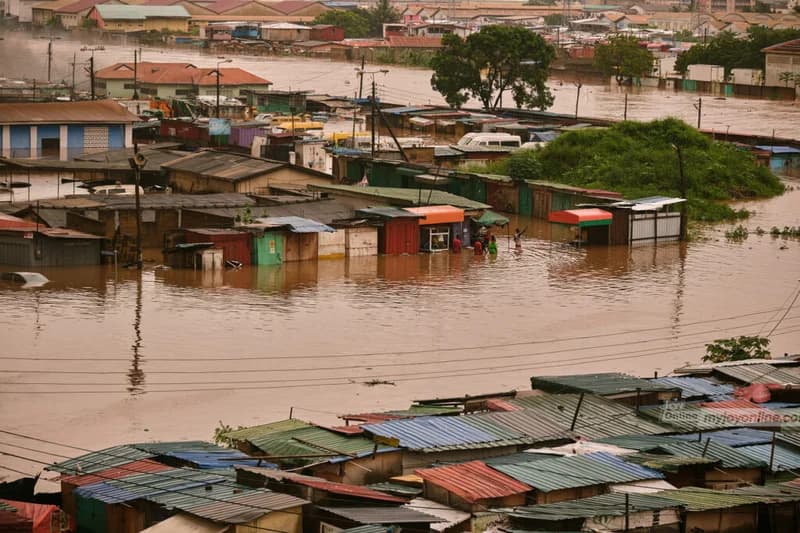
Ghana's economy is grappling with the devastating aftermath of recent flooding, which has forced many businesses to halt operations and prompted economists to warn of billions of cedis in lost productivity. Mark Badu Aboagye, Chief Executive of the Ghana National Chamber of Commerce and Industry (GNCCI), has announced that many employees of member companies, particularly in the manufacturing sector, may be required to stay home as businesses struggle to recover from damaged stock and raw materials. This operational paralysis, coupled with the loss of at least 18 lives and significant property damage, has highlighted the fragile state of the nation's infrastructure and its impact on the private sector.
The financial sector is responding to the crisis with measures aimed at stabilizing affected enterprises. John Awuah, representing the Ghana Bankers Association, stated that banks are prepared to renegotiate loans for businesses hit by the floods, drawing a parallel to the interventions made during the COVID-19 pandemic. Simultaneously, the insurance industry is under pressure to provide rapid relief. Ernest Frimpong of Bedrock Insurance confirmed that efforts are underway to process and pay claims within five days, although he noted that delays frequently arise from inadequate documentation provided by the claimants. Despite these mitigation efforts, the consensus among industry leaders is that the floods remain a largely manmade issue that requires systemic intervention rather than just financial remedies.
Adding to the alarm, economist Professor Peter Quartey has criticized what he describes as a colossal waste of public resources on ineffective flood prevention. He argued that Ghana is paying billions for its failure to manage drainage and sanitation properly, noting that previous investments have yielded poor results due to substandard execution. Professor Quartey highlighted that the nation's Water, Sanitation, and Hygiene (WASH) initiatives are heavily reliant on donor funding, which he believes is unsustainable. He emphasized that the economic crisis is exacerbated by traffic congestion and the psychological toll on the workforce, which collectively kill the economy by stifling productivity and increasing operational costs for everyone involved.
To prevent a recurrence of this annual economic drain, experts are calling for a radical overhaul of local governance and the strict enforcement of sanitation laws. Professor Quartey and other panelists urged the government to prioritize the removal of structures obstructing waterways and to move away from a culture of reactive management. As businesses wait for the waters to recede and for insurance claims to materialize, the broader challenge remains whether the state can transition from donor-dependent, poorly executed projects to a robust, self-funded infrastructure strategy that protects both human lives and the commercial interests of the nation.
This story touches markets covered on Anansi Intelligence ↗.
More from business
Continue exploring similar stories


