••
Ghana Health Service Launches REACH Program for 2,300 Local Workers as 47 Professionals Depart for Saint Kitts and Nevis
•3 min read•3 sources
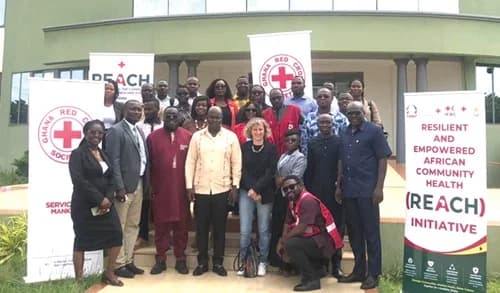
The Ghana Health Service (GHS) has initiated a significant dual-track strategy to bolster the nation's healthcare delivery system, simultaneously launching a large-scale domestic community health program and facilitating international professional development for skilled staff. In a major move to strengthen primary healthcare at the grassroots level, the GHS has partnered with the Ghana Red Cross Society and the International Federation of Red Cross and Red Crescent Societies (IFRC) to launch the Resilient and Empowered African Community Health (REACH) programme. This initiative is complemented by the government's Health Workforce Migration Initiative, which recently saw the deployment of dozens of Ghanaian health professionals to Saint Kitts and Nevis under a temporary labor exchange agreement.
The REACH programme represents a massive investment in local health infrastructure, with plans to recruit and train over 2,300 community health workers across four key regions: Volta, Western, Northern, and Ashanti. During the launch, Dr. Samuel Kaba Akoriyea emphasized that the initiative is strategically aligned with Ghana’s free primary healthcare agenda and the President’s goal for universal health coverage. Over a two-year implementation period, these workers will be integrated into national systems to enhance disease detection, improve health data collection, and increase the overall uptake of health services in underserved communities. By empowering local residents to take charge of their health outcomes, the programme aims to create a more resilient national health framework.
Parallel to these domestic efforts, the Ministry of Health is managing the external movement of health personnel through a structured migration framework. Recently, 47 Ghanaian health professionals departed for Saint Kitts and Nevis on fixed-term contracts lasting between two and three years. This initiative is designed to provide health workers with lucrative overseas employment and international experience without causing a permanent "brain drain." At a farewell event held at the Accra International Airport, officials including Deputy Chief of Staff Nana Oye Bampoe Addo and Deputy Minister of Health Dr. Grace Ayensu-Danquah highlighted that the move safeguards Ghana’s health system by ensuring the professionals return home after their service to apply their newly acquired skills locally.
The health workers involved in the migration programme expressed significant enthusiasm, viewing the opportunity as a chance to represent Ghana on a global stage while benefiting from improved remuneration and working conditions. This balanced approach—expanding the community health workforce by thousands domestically while strategically placing specialized staff in international roles—reflects a maturing health human resource strategy. By focusing on both the immediate needs of rural communities through the REACH programme and the career aspirations of professionals via migration initiatives, Ghana aims to build a sustainable, globally integrated, and resilient healthcare sector.
This story touches markets covered on Anansi Intelligence ↗.
More from health
Continue exploring similar stories


