••
Ghana Advances Localized Tech Solutions: From Youth-Led Bushfire Robotics to AI-Driven Sustainable Development
•2 min read•2 sources
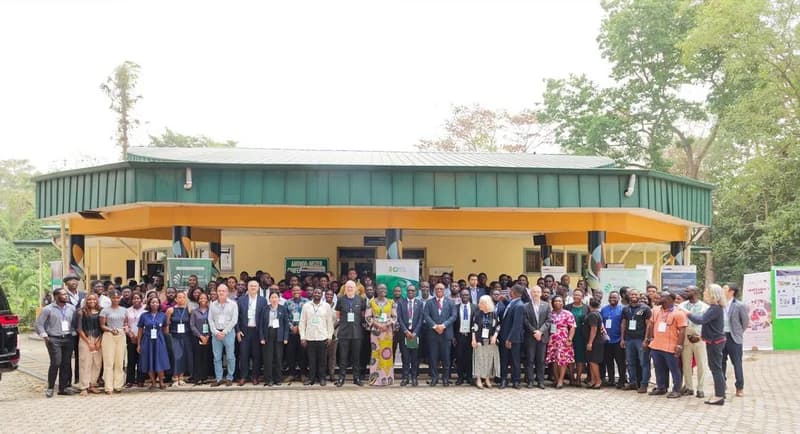
Ghana's technological landscape is witnessing a surge in home-grown innovations, ranging from grassroots robotics to high-level academic collaborations in Artificial Intelligence (AI). Recent developments at the Telecel DigiTech Academy and the Kwame Nkrumah University of Science and Technology (KNUST) underscore a growing commitment to leveraging advanced technology to solve local challenges in agriculture, healthcare, and environmental safety. These initiatives highlight a multi-tiered approach to digital transformation, involving both youth-led primary education and sophisticated academic research aimed at achieving global development goals.
In Jirapa, the Telecel Foundation’s DigiTech Academy is preparing to graduate its third cohort of 500 students, who have demonstrated remarkable ingenuity by developing a robot designed to combat bushfires. Led by young innovators such as 12-year-old Miltiades, the project addresses the persistent threat of fires to local farming communities. The robot is engineered to detect heat sources, navigate toward them, and release water to contain the blaze. Since its inception in September 2024, the academy has trained approximately 2,300 students, emphasizing strong female representation and practical robotics skills that foster community-based problem-solving.
Simultaneously, in Kumasi, KNUST has partnered with the French Embassy to host the AI4SD Mini-Conference, focusing on AI-driven solutions for Africa's development challenges. This collaboration has already birthed critical tools, including an AI toolkit for crop disease detection and specialized software for diagnosing rare diseases in newborns. Project Lead Professor Jerry John Kponyo characterized AI as essential "socio-technical infrastructure" that must be context-aware and inclusive. Vice-Chancellor Professor Rita Akosua Dickson and Julien Lecas from the French Embassy both emphasized the importance of ensuring that AI solutions are tailored specifically to the African socio-economic landscape to ensure sustainable impact.
These developments signal a significant shift toward localized technology where global tools like AI and robotics are adapted to solve indigenous problems. While the Telecel Foundation focuses on building a pipeline of future tech talent at the grassroots level, the KNUST-French Embassy partnership provides the high-level research framework necessary for scalable national impact. Together, these efforts demonstrate that Ghana is transitioning from a consumer of technology to a proactive innovator, creating a sustainable ecosystem where digital literacy and advanced research converge to drive progress.
This story touches markets covered on Anansi Intelligence ↗.
More from technology
Continue exploring similar stories


