••
Ghana Accelerates Green Economy Transition with Volta Corridor Project and $6 Billion Horticulture Growth
•3 min read•7 sources
Ghana is witnessing a significant shift toward a sustainable, "green" economy, driven by massive infrastructure projects and a booming horticulture sector. At the forefront of this transformation is the initiation of negotiations for the Volta Economic Corridor, the nation’s first net-zero economic corridor. This project, involving the Volta River Authority (VRA), the Ghana Infrastructure Investment Fund, and the 24-Hour Economy and Accelerated Export Development Secretariat, was approved by the Cabinet in July 2025. The initiative aims to integrate agriculture, industry, and trade along the Volta Lake while maintaining hydroelectric operations. With negotiations expected to conclude in late 2026, the corridor is set to become a hub for agro-ecological parks and industrial development supported by private investment.
Parallel to these large-scale infrastructure developments, Ghana's horticulture and gardening sectors are evolving from passive hobbies into high-value commercial enterprises. Experts project the country's fruits and vegetables sector will reach a valuation of $6.01 billion by 2026, fueled by an expanding urban middle class and rising demand for fresh produce. This growth was a central theme of the 14th Ghana Garden and Flower Show, which emphasized that "Green Means Business." To ensure the longevity of this growth, industry leaders at the Agribusiness Launchpad 2.0 have called on Generation Z entrepreneurs to embrace technology and innovation, urging a move toward commercialization and modernized supply chain management.
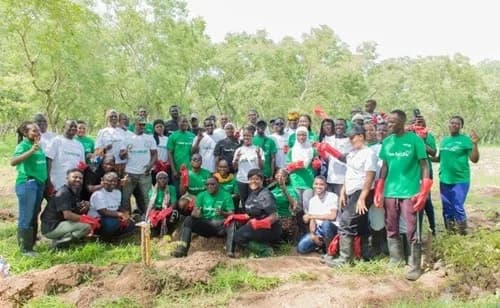
The push for sustainability is also reshaping the cosmetics and financial industries. The World Sustainability Organization (WSO), in partnership with Fort Group Ghana, recently launched a Sustainable Cosmetics Certification to help local manufacturers access international markets. This initiative leverages Ghana's established shea industry and responds to a 9% growth in the organic beauty segment. In the financial sector, Advans Ghana Savings and Loans has reinforced its commitment to environmental stewardship by planting 1,600 Acacia, Teak, and Shea seedlings in the Chipa and Kogni Forest Reserves. These efforts align with a broader corporate shift toward climate resilience and reduced environmental footprints through digital transformation.
While these emerging sectors show promise, the traditional cocoa market continues to face volatility. Cocoa prices recently retreated following a rally triggered by COCOBOD's warnings of a potential production decline for the 2026/27 season. This fluctuation highlights the necessity of the government's current diversification strategy. By fostering high-value exports in cosmetics, supporting tech-driven agribusiness, and developing the Volta Economic Corridor, Ghana aims to build a more resilient economic framework that balances industrial growth with environmental conservation under the current administration of President John Mahama.
This story touches markets covered on Anansi Intelligence ↗.
Related topic
John Mahama: Latest News & Updates →More from business
Continue exploring similar stories


