••
Ghana Tourism Federation Demands Visa Fee Review as Accommodation Revenue Slumps 19%
•3 min read•11 sources
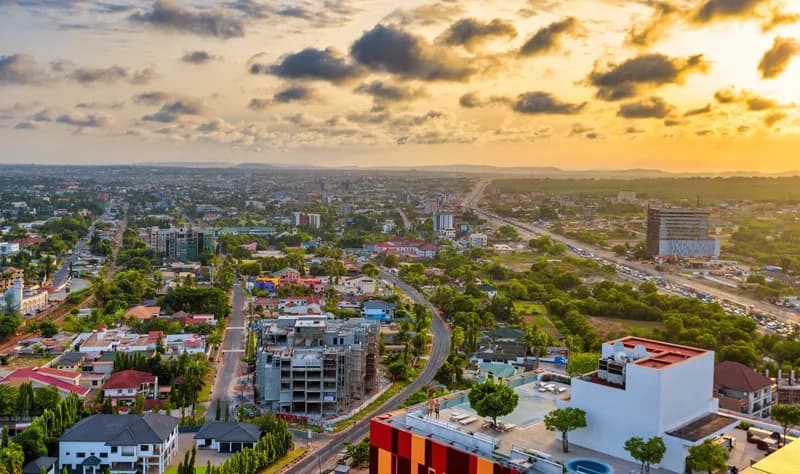
Ghana's tourism and accommodation sector is facing a period of transition as new data from the Ghana Statistical Service (GSS) reveals a sharp 19% decline in Revenue per Available Room (RevPAR) between November 2024 and January 2025. Despite the peak holiday season, RevPAR dropped from GH¢603 to GH¢490, while average daily rates fell from GH¢1,351 to GH¢1,112. In response to these figures, the Ghana Tourism Federation (GHATOF) has intensified calls for the government to review the $260 e-visa fee, arguing that the high cost and single-entry restrictions place Ghana at a significant competitive disadvantage compared to its regional neighbors.
The GSS report highlights a notable shift in market dynamics, where domestic travelers have become the primary backbone of the industry. Between November 2024 and February 2025, domestic guest numbers ranged from 1.87 million to 2.17 million monthly, vastly outnumbering the fewer than 40,000 foreign guests recorded in the same periods. Interestingly, while hotels remain the preferred choice for international visitors—who tend to stay longer (three to four nights)—hostels have seen an explosion in demand from domestic guests. Hostels achieved staggering occupancy rates between 91% and 95%, while some one-star hotels struggled with occupancy as low as 28%, indicating a growing preference for lower-cost accommodation options.
Regional disparities further complicate the economic landscape. The Savannah and Central regions outperformed national averages, with the Savannah Region leading at 63.7% occupancy in early 2025. Conversely, regions such as the Volta and Eastern regions struggled below 28%. In the capital, Accra continues to attract the most foreign visitors, yet it remains one of the continent's most expensive hubs; a 2026 analysis by Fortren & Company ranked Accra third in Africa for high-end rent, with luxury two-bedroom apartments averaging GH¢25,469 per month. These high costs across both accommodation and living expenses are seen as potential barriers to sustained tourism growth.
To counter these challenges, GHATOF President Seth Ocran is urging the industry to embrace digitalization and artificial intelligence (AI) to enhance destination marketing and visitor experiences. Ocran believes that adopting emerging technologies and reducing entry barriers could help Ghana reach its goal of 2 million annual international arrivals. Amidst these macro-level shifts, private sector players continue to mark milestones, such as the Studio 7 Clinic & Med Spa, which recently celebrated its 10th anniversary, underscoring the resilience of local businesses in the broader wellness and hospitality ecosystem. Moving forward, the GSS and GHATOF emphasize that better utilization of existing room capacity and policy reforms are essential to maximizing the sector's economic contribution.
