••
Ghana’s Free Speech Dilemma: Supreme Court Challenges and Political Tensions Over Criminal Libel Laws
•3 min read•29 sources
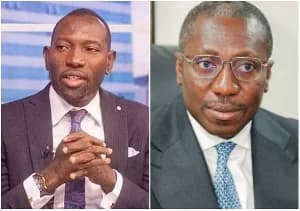
Ghana is currently witnessing a significant legal and political confrontation over the boundaries of free speech, highlighted by a landmark Supreme Court challenge and the high-profile detention of political figures. Austin Kwabena Brako-Powers, a Ghanaian citizen, has invoked the Supreme Court’s original jurisdiction to strike down provisions of the Criminal Offences Act of 1960 and the Electronic Communications Act of 2008. The lawsuit argues that Section 208(1) of Act 29, which criminalizes the publication of statements likely to cause public alarm, is unconstitutionally broad and places an unfair burden on the accused to prove the accuracy of their statements. This legal challenge arrives at a time of heightened sensitivity, as civil society organizations and opposition figures warn against a burgeoning 'culture of silence' and the potential emergence of a 'digital police state.'
Central to this tension is the ongoing legal battle involving Kwame Baffoe, popularly known as Abronye DC, the Bono Regional Chairman of the New Patriotic Party (NPP). Baffoe remains in custody following charges of offensive conduct and the publication of false news, with the Accra Circuit Court citing the risk of reoffending as grounds for denying bail. His detention has sparked fierce criticism from NPP leadership, including Samuel Jinapor and Haruna Mohammed, who have raised alarms regarding Baffoe's deteriorating health following a recent surgery. The situation escalated further when Minority Leader Alexander Afenyo-Markin publicly critiqued the judiciary's handling of the case, leading to counter-accusations of political interference and calls for contempt citations from figures like Lamtiig Apanga of the Gaming Commission.
Civil society and national peace institutions have expressed deep concern over the impact of these developments on Ghana's democratic stability. Dr. Kojo Pumpuni Asante of CDD-Ghana has warned that the trend of arresting citizens for alleged free speech violations represents a 'slippery slope' that could ultimately silence journalists and ordinary citizens. While acknowledging the challenges posed by digital misinformation and harmful rhetoric on social media, Dr. Asante emphasized that the repeal of criminal libel laws in 2001 was intended to limit the state's power to criminalize speech. He called for a balanced approach that ensures accountability and public safety without infringing upon the constitutional rights of expression and the presumption of innocence.
As the Supreme Court prepares to deliberate on the constitutionality of these decades-old laws, the National Peace Council (NPC) has urged all political actors to exercise restraint and uphold the rule of law. The Council announced plans to convene meetings with political leaders to foster dialogue and mitigate the escalating rhetoric that threatens national cohesion. The outcome of the Brako-Powers suit and the resolution of high-profile political trials will likely define the future of free expression in Ghana, determining whether the nation will continue to lead as a bastion of democratic freedom or move toward more restrictive speech regulations in the digital age.
This story touches markets covered on Anansi Intelligence ↗.
Related topic
NPP (New Patriotic Party): Latest News →More from politics
Continue exploring similar stories


