••
Supreme Court Reshapes Ghana’s Democracy by Abolishing Delegate System and Affirming Special Prosecutor’s Mandate
•3 min read•23 sources
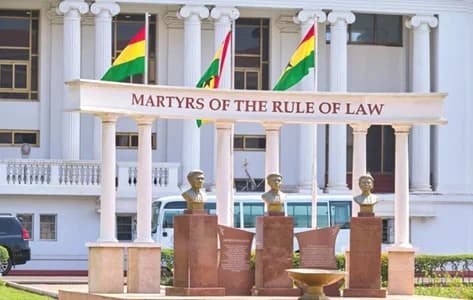
The Supreme Court of Ghana has issued two landmark rulings that fundamentally alter the country’s political and legal framework, focusing on the democratization of internal party elections and the structural validity of anti-corruption bodies. In a significant decision, the Court abolished the long-standing delegate-based electoral college system, mandating that all registered political party members in good standing be allowed to vote in presidential and parliamentary primaries. Simultaneously, the Court upheld the constitutionality of the Office of the Special Prosecutor (OSP) Act, 2017, while clarifying that the Attorney-General retains the ultimate constitutional power to discontinue criminal proceedings initiated by the office.
The shift to a “one member, one vote” system is intended to curb the pervasive influence of monetization and vote-buying in Ghanaian politics. Mary Awelana Addah, Executive Director of Transparency International Ghana, welcomed the ruling as a reflection of political realities, noting that expanding the voter base makes vote-buying less feasible compared to the restricted delegate system. However, the decision has met with mixed reactions from political stakeholders. While Prof. Kingsley Nyarko (NPP) praised the move toward inclusivity, NDC MP Ahmed Ibrahim expressed concern that the ruling might disadvantage minority tribes by diluting their representation. Furthermore, Janet Nabla of the People’s National Party (PNP) and Solomon Owusu of the United Party (UP) highlighted the massive financial burden this mass electoral system places on parties, with Nabla arguing that the state must provide funding for these expanded primaries.
Regarding the Office of the Special Prosecutor, the Court’s affirmation of its constitutionality was hailed as a victory by anti-corruption advocates like Oliver Barker-Vormawor, who argued the ruling makes it politically difficult for future administrations to dismantle the office. Nevertheless, the confirmation of the Attorney-General’s power to enter a nolle prosequi—the authority to halt any OSP prosecution—has sparked intense debate. Private legal practitioner Justice Abdulai remarked that the OSP's independence remains largely theoretical because its prosecutorial authority is ultimately subordinate to Article 88 of the 1992 Constitution. Others, including Dr. Jonathan Asante-Otchere, dismissed the legal friction between the OSP and the Attorney-General as an unnecessary “ego clash” that hampers collective efforts to protect the public interest.
As Ghana navigates these structural changes, the focus turns toward the practical implementation of the Court’s orders. Legal and governance experts suggest that the transition away from the delegate system will require significant amendments to party constitutions and potentially the establishment of a “Democracy Fund” to assist parties with the costs of expanded primaries. While the rulings strengthen the formal structures of accountability and participation, the effectiveness of these reforms will ultimately depend on the willingness of political actors to prioritize transparency over institutional rivalry. These decisions mark a pivotal moment in the evolution of Ghana’s Fourth Republic, challenging both political parties and anti-corruption agencies to realign their operations with the latest constitutional interpretations.
This story touches markets covered on Anansi Intelligence ↗.
Related topic
NDC (National Democratic Congress): Latest News →More from politics
Continue exploring similar stories


