••
Government to Expand SHS Infrastructure with $300M World Bank Facility as Akatsi South Schools Receive Essential Furniture
•2 min read•2 sources
Ghana’s education sector is set for a significant infrastructure overhaul following the announcement of a US$300 million World Bank-backed project and a renewed call for private sector support at the local level. The dual-track approach aims to address the growing enrollment pressures triggered by the Free Senior High School (SHS) policy while tackling persistent furniture shortages in basic schools. These developments highlight a concerted effort to modernize learning environments and improve educational outcomes across the country.
Minister of Education, Haruna Iddrisu, revealed that the government will utilize the US$300 million facility to construct 10 new senior and technical high schools and rehabilitate 150 existing institutions. This initiative is designed to strengthen secondary education by providing modern laboratories and workshops, particularly for technical and vocational training. During a parliamentary session, the Minister confirmed that budget approvals are already in place, with procurement processes expected to commence shortly. Additionally, the government plans to revise the Computerized School Placement System (CSSPS) to enhance transparency and address rising concerns regarding student indiscipline.
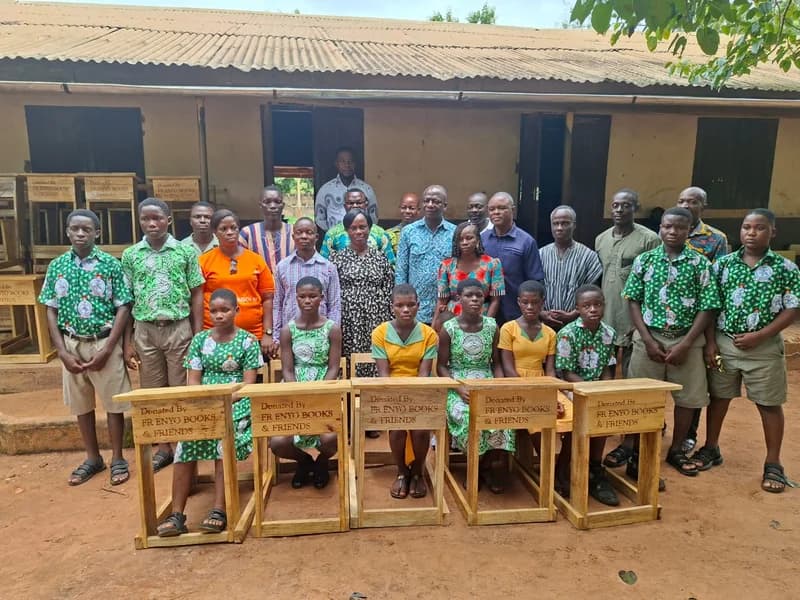
While national-level investments are underway, local authorities are emphasizing the vital role of public-private partnerships in addressing immediate resource gaps. In the Akatsi South Municipality, 13 basic schools recently received a donation of dual desks from Rev. Fr. S/Lt Dorgbetor. Municipal Chief Executive (MCE) Daniel Dagba described the donation as a crucial investment in the municipality’s future, noting that many schools still struggle with inadequate furniture. The shortage often forces students to share desks or sit on floors, a situation that directly impacts the quality of education and student welfare.
The synergy between large-scale government projects and grassroots community support is essential for the long-term success of Ghana's educational reforms. MCE Dagba urged headteachers and parents to prioritize school attendance and the maintenance of donated resources to ensure maximum impact. As the government moves forward with its ambitious SHS expansion plan, the continued involvement of individuals and organizations will be necessary to bridge the infrastructure deficit and ensure that every Ghanaian child has access to a conducive learning environment.
This story touches markets covered on Anansi Intelligence ↗.
More from education
Continue exploring similar stories


