••
Ghana Bolsters Economic Transformation through Shea Commercialization, Cocoa Expansion, and Fisheries Modernization
•2 min read•15 sources
Ghana is undertaking a series of strategic initiatives across its agricultural and fisheries sectors to drive economic transformation and sustainability. A central pillar of this effort is the launch of the National Shea Commodity Platform (NSCP), which marks a significant transition from wild harvesting to commercial shea cultivation. Supported by the Tree Crops Development Authority and the United Nations Development Programme, the NSCP aims to future-proof the industry through improved seedlings and better market access. This initiative is bolstered by the $54.5 million Ghana Shea Landscape Emission Reduction Project, which seeks to restore 6,000 hectares of land and benefit over 100,000 people while significantly reducing carbon emissions.
In the cocoa sector, the government is focusing on both operational efficiency and geographical expansion. The Cocoa Health and Extension Division (CHED) recently held a strategic workshop in Aburi to refine the nationwide distribution of CODAPEC and Hi-Tech inputs for the 2025/26 season, emphasizing transparency and accountability. Simultaneously, legislators in the Volta and Oti regions have partnered with Afarinick Company Limited to establish these areas as a new cocoa production frontier. This partnership involves distributing 400,000 seedlings and implementing advanced irrigation and smart-monitoring technologies to optimize yields, with a long-term goal of establishing local processing factories to stimulate job creation.
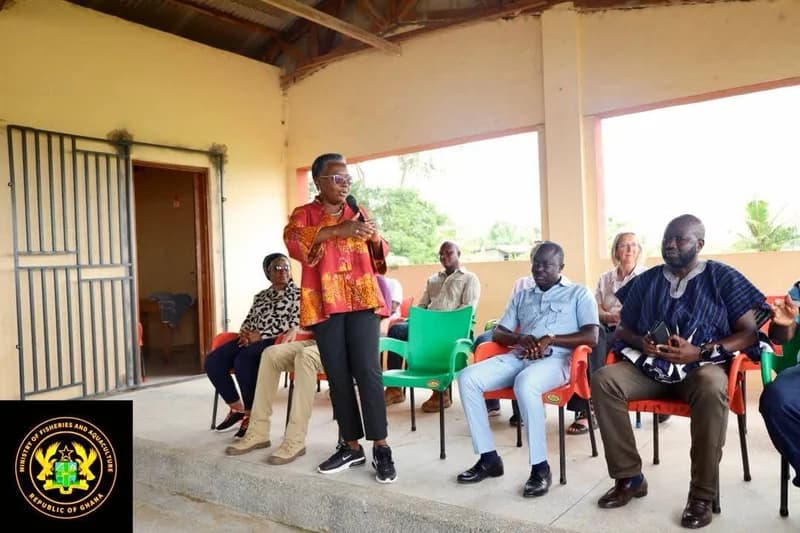
The fisheries and aquaculture sectors are also seeing innovative developments through international and private-sector partnerships. In the Shama District, the government is collaborating with Norway to construct a modern fishing harbor and launch the "Oceans for Development" framework for sustainable marine management. Furthering local production, the Komfueku–Shama Aquaculture Project—a joint venture with R&B Farms—is transforming abandoned quarry and clay pits into productive fish farms. This initiative is designed to alleviate pressure on marine stocks while converting degraded lands into economic assets.
Empowerment of women and youth remains a critical theme across these agricultural advancements. The HAPPY Programme, a partnership with the Mastercard Foundation, recently engaged over 600 young women in Savelugu in the rice, soybean, tomato, and poultry value chains through specialized training in modern farming practices. Similarly, the commercialization of the shea and aquaculture sectors specifically targets women for economic inclusion. By integrating modern technology, sustainable environmental practices, and targeted social empowerment, Ghana is positioning its primary industries as resilient drivers of long-term economic growth.
This story touches markets covered on Anansi Intelligence ↗.
More from business
Continue exploring similar stories


