••
Ghana Faces Nationwide Sanitation Crisis as Landfill Failures and Poor Infrastructure Trigger Public Health Warnings
•3 min read•6 sources
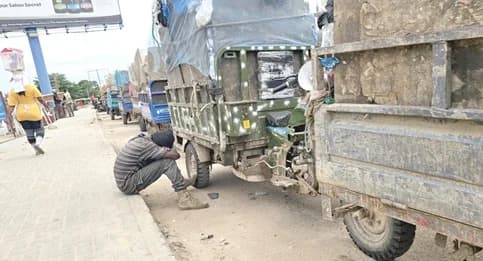
Ghana is currently grappling with a severe sanitation crisis across its major metropolitan areas, with waste management systems in Accra, Kumasi, and Ho nearing a state of collapse. From overflowing landfills in the capital to mechanical failures in the Ashanti Region, the accumulation of uncollected refuse is raising urgent public health concerns. Residents and local authorities warn that the situation, exacerbated by seasonal rains, poses an imminent risk of disease outbreaks and environmental contamination, necessitating immediate intervention from the central government to prevent a larger emergency.
In the Greater Accra Region, the Kpone Controlled Dumpsite and the McCarthy Hill facility have become major flashpoints. Heavy rains have rendered Kpone nearly inaccessible, leading waste management firms to apologize for significant collection delays. At McCarthy Hill, a bottleneck has formed as over 500 refuse-laden tricycles and trucks queue daily, disrupting traffic along the Mallam–Kasoa corridor. Dr. Pennante Naa Ayikailey Bruce-Vanderpuije, a Senior Research Scientist at the CSIR-Water Research Institute, has warned that the McCarthy Down landfill poses a specific threat to the Weija Dam. Harmful chemicals like phthalates and bisphenol A (BPA) could leach into the Densu River, potentially contaminating the primary water supply for much of the capital.
The crisis extends to Kumasi, where the breakdown of heavy machinery at the Oti Landfill Site has left the city struggling with heaps of uncollected waste. Tricycle operators are currently unable to offload refuse, forcing residents to store waste at home for over a week, creating hazardous conditions as the rainy season approaches. Meanwhile, in the Ho Municipality, the closure of vital public facilities—including the Ghana@50 toilet at Ho Bankoe—has led to an increase in indiscriminate waste disposal. Ho Municipal Chief Executive Stephen Adom confirmed that while efforts are underway to secure funding for repairs, the lack of maintenance and outdated infrastructure continue to undermine hygiene standards for both residents and travelers.
To address these systemic failures, stakeholders are advocating for a shift toward community-led solutions and improved inter-agency coordination. In the Volta Region, Monitoring and Evaluation Officer Felix Bosonkui recently led a four-day training workshop on Community-Led Total Sanitation (CLTS) to eliminate open defecation, highlighting the heavy economic toll of sanitation-related health costs. Local Government Minister Ahmed Ibrahim has previously signaled that the nation’s landfills are nearing full capacity, reinforcing the call from scientists and local leaders for stronger protection of buffer zones and the establishment of new disposal sites. Without a comprehensive national strategy to modernize waste infrastructure, Ghana remains vulnerable to a preventable public health emergency.
This story touches markets covered on Anansi Intelligence ↗.
More from health
Continue exploring similar stories


