••
Ghana Strengthens Climate Governance and Sahel Security Readiness Amidst Renewed Political Debate Over Galamsey
•3 min read•20 sources
Ghana’s government and regional stakeholders are intensifying efforts to bolster national resilience against a backdrop of regional instability and environmental degradation. As the country prepares for a major national forum on Sahelian security threats, the Minister of State for Climate Change and Sustainability, Seidu Issifu, has launched a nationwide tour to integrate climate resilience into local governance. These administrative pushes come amidst a heated political debate over the efficacy of the "galamsey" fight, with opposition figures and civil society groups challenging the government’s narrative of progress in protecting Ghana's natural resources.
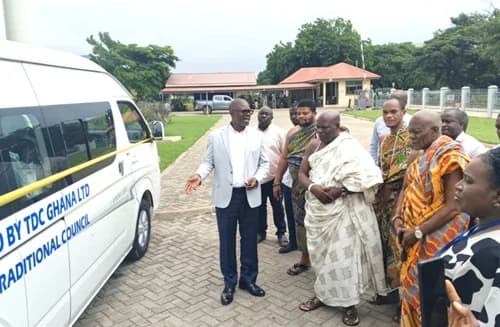
In the Upper West Region, Minister Seidu Issifu emphasized the urgent need for Metropolitan, Municipal, and District Assemblies (MMDAs) to establish dedicated Climate Change and Sustainability Units. This initiative aims to address erratic rainfall and dry spells that threaten local agriculture by integrating climate-resilient strategies directly into local development planning. Regional leaders, including Charles Lwanga Puozuing, have highlighted that while significant climate finance remains untapped, the new units will enhance local capacity to draft viable funding proposals. This focus on local governance extends to urban planning, where the Local Government Service Association of Physical Planners (LoGSAPP) and TDC Ghana Ltd are calling for the strict enforcement of the Land Use and Spatial Planning Act. They argue that prosecuting illegal land sales, particularly on Ramsar sites and wetlands, is essential to mitigate the recurring floods that have devastated local infrastructure.
Parallel to these environmental initiatives, the political fallout from illegal mining, or galamsey, remains a major flashpoint. NDC Deputy General Secretary Mustapha Gbande recently claimed that current strategies are yielding positive results in protecting forest reserves and river bodies. However, this optimism is sharply contested by the Ghana Coalition Against Galamsey (GCAG), which warns that lawlessness and selective enforcement continue to undermine environmental protections. The coalition specifically raised concerns regarding potential corruption within the National Anti-Illegal Mining Operations Secretariat (NAIMOS). Adding to the political pressure, Kofi Tonto, a spokesperson for Dr. Mahamudu Bawumia, criticized President John Mahama’s administration for failing to prosecute government appointees allegedly involved in the trade, characterizing the lack of action as a failure in leadership.
Beyond domestic environmental concerns, Ghana is pivoting toward a proactive regional security stance. Stakeholders under the Sahel Peace Initiative (SPI) are currently assessing the country’s preparedness for potential spillover effects from instability in the central Sahel. As part of a strategy leading into a national forum in Accra, officials are advocating for the Bamako Declaration, which seeks coordinated West African action for peace. National SPI Coordinator Richard Nyaaba Akurugu noted that evaluating early warning systems is a priority to build resilience against violent extremism. Simultaneously, the Centre for Social Innovation and Democratic Thought (CSIDT) has proposed a radical shift in disaster management, suggesting that 80% of the GH¢350 million flood budget be reallocated toward prevention rather than reactive relief. Together, these moves signal a broader government effort to transition from reactive crisis management toward a sustainable, preventive governance model.
This story touches markets covered on Anansi Intelligence ↗.
Related topic
NDC (National Democratic Congress): Latest News →More from politics
Continue exploring similar stories


