••
Ghana Confronts Russia Over Alleged Digital Exploitation and Privacy Violations Against Ghanaian Women
•3 min read•11 sources
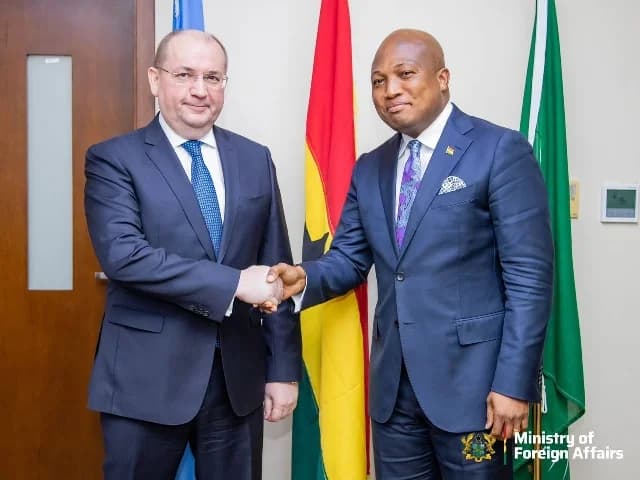
The Government of Ghana has formally summoned the Russian Ambassador, Sergei Berdnikov, to express strong discontent following a national outcry over the non-consensual recording and distribution of sexually explicit images involving Ghanaian women. The Ministry of Foreign Affairs registered a formal protest against what it described as 'atrocious conduct' by an individual alleged to be a Russian national. The case, which has sparked a national crisis, involves the surreptitious filming of intimate encounters that were subsequently monetized and published on various online platforms. The Ghanaian government emphasized that these actions constitute a grave violation of national laws, cybercrime regulations, and the privacy rights of its citizens.
During the diplomatic meeting, Ambassador Berdnikov acknowledged the seriousness of the allegations and expressed Russia's willingness to assist in the investigation, despite the absence of a formal extradition treaty between the two nations. However, the Ambassador raised significant questions regarding the suspect's identity. He noted that the name circulating in the media and government reports—Vyacheslav Trahov, also known as 'Yaytseslav'—does not align with standard Russian naming conventions and may instead be a vulgar expression used as a false alias. While the Russian Embassy has not yet confirmed the suspect's nationality, it has committed to sharing intelligence and relevant information to help Ghanaian authorities track down the perpetrator.
Domestic response to the scandal has been swift, with the Ministry of Gender, Children, and Social Protection condemning the acts and initiating support services for the victims. Member of Parliament Samuel Nartey George and other officials have called for decisive legal action to protect the digital privacy of Ghanaians and deter future infringements. The controversy has highlighted a disturbing trend referred to as 'African Casting,' where foreign nationals exploit local individuals to create content for global digital revenue. This case is being viewed as a turning point for Ghana's digital privacy framework, testing the strength of current legal measures against the impacts of digital predation and foreign exploitation.
Beyond the immediate criminal investigation, the incident has provoked a broader societal debate regarding sexual responsibility and public health in Ghana. Some commentators argue that the outrage over the foreign fugitive should also prompt a reflection on internal systemic issues, including a culture of silence surrounding sexual health and the accountability of local actors. As the investigation continues, the Ghanaian government remains focused on leveraging diplomatic channels to achieve justice for the victims. The Ministry of Foreign Affairs has assured the public of its commitment to pursuing the suspect through international cooperation, emphasizing that protecting the dignity of citizens in the digital space is a paramount national priority.
This story touches markets covered on Anansi Intelligence ↗.
More from politics
Continue exploring similar stories


