••
Africa’s Water Crisis: Ghana Reports River Recovery While Kenya Battles Rising Lakes and Wildlife Hazards
•2 min read•2 sources
Across the African continent, the management and impact of water bodies have become central to national stability and environmental health. In Ghana, the Ministry of Lands and Natural Resources is reporting the first signs of success in a long-standing battle against illegal mining pollution. Assessments of the Pra, Ankobra, and Birim rivers—historically devastated by illegal mining activities—now show marginal improvements in water quality. Ministry spokesperson Paa Kwesi Shandorf noted that while the rivers are not yet fully restored, the nine-month trend is positive, signaling that government-led interventions and increased public scrutiny are beginning to yield results.
Despite these gains in water clarity, Ghanaian authorities emphasize that land restoration remains a significant hurdle. Reclaiming the vast tracts of land destroyed by illegal excavators is an expensive and complex process. To address this, the government is collaborating with major industry players, including Newmont Corporation and Zijin Mining Group, to fund and execute restoration projects. These initiatives aim to stabilize the ecosystem and return degraded sites to productive use, though the Ministry continues to call for more robust support to manage the high costs associated with environmental rehabilitation.
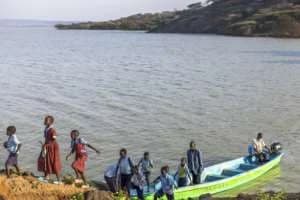
Meanwhile, in East Africa, the crisis is one of unprecedented flooding rather than industrial pollution. Kenya’s Rift Valley lakes, particularly Lake Baringo, have surged to record levels due to climate change-induced rainfall, causing a severe ecological and humanitarian emergency. Lake Baringo has expanded by 70% since 2010, submerging homes, schools, and resorts. This expansion has brought dangerous wildlife into direct contact with human populations; crocodiles have been spotted on the roofs of submerged buildings, and hippo attacks are on the rise. The displacement of tens of thousands of residents has strained local resources and disrupted the education of students who must now navigate hazardous waters to attend class.
The economic fallout in Kenya has been equally devastating, particularly for the tourism sector, which once generated $1 million annually but has now seen earnings drop to $200,000. As both Ghana and Kenya navigate these disparate water-related crises—one driven by local extractive industries and the other by global climate shifts—the need for sustainable environmental policies becomes increasingly urgent. Whether through the stricter regulation of mining or the adaptation to changing weather patterns, the management of Africa’s natural resources remains a critical priority for regional governments and international partners alike.
This story touches markets covered on Anansi Intelligence ↗.
More from africa
Continue exploring similar stories


