••
Ghana Advances Port Modernisation and Urban Investment Strategies Amid Operational Challenges at MPS Terminal
•3 min read•8 sources
Ghana is intensifying its efforts to modernise critical trade infrastructure and boost local revenue through technology-driven reforms. During a high-level meeting on June 9, 2026, the Ghana Ports and Harbours Authority (GPHA) and the Israeli Ambassador discussed leveraging advanced technology to position the Port of Tema as West Africa’s leading container hub and the Port of Takoradi as a premier oil and gas services centre. This push for modernisation is mirrored at the local government level, where the Korle Klottey Municipal Assembly has announced a bold plan to increase its internally generated revenue from GH"14.7 million in 2023 to GH"40 million by 2025. Municipal Chief Executive Alfred Allotey-Gaisie attributed this projected growth to aggressive digitalisation and revenue reforms designed to fund major infrastructure projects, including the redevelopment of the Odawna Market.
Despite these strategic ambitions, operational hurdles at the Meridian Port Services (MPS) Terminal in Tema are causing significant friction for the business community. Importers and freight forwarders have raised alarms over mounting congestion triggered by persistent scanning issues and system disruptions. Stakeholders report that many containers cannot complete the clearance process because necessary scan images are frequently unavailable, leading to a backlog of cargo and increased costs through demurrage and storage fees. While Deputy Minister for Transport Dorcas Affo-Toffey recently commended MPS for its adoption of innovative technologies like Optical Character Recognition (OCR) and electric vehicles, the current terminal delays highlight a gap between technological implementation and day-to-day operational efficiency.
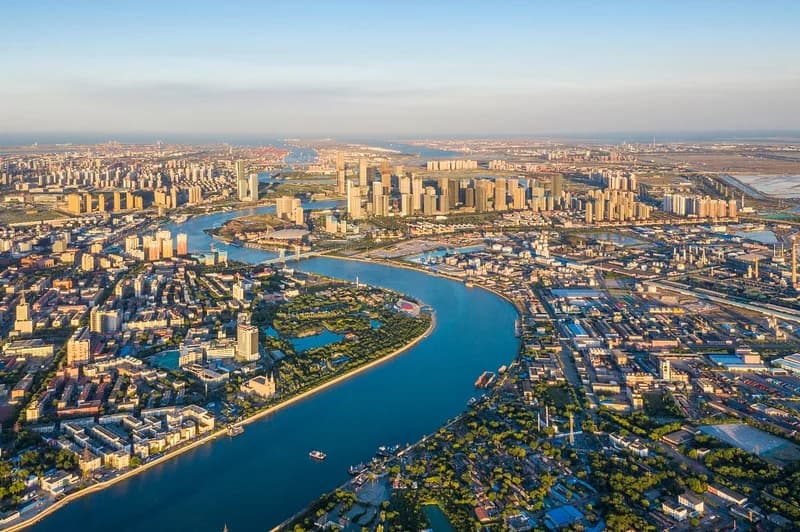
To bridge these developmental gaps, Ghanaian officials are looking toward successful international models of urban and economic transformation. The evolution of the Haihe River in Tianjin, China, serves as a prominent case study for how natural resources can be integrated into urban growth strategies. Once a simple transport route, the Haihe has been revitalised into a vibrant economic corridor through strategic waterfront development and the construction of unique bridges, boosting tourism and local commerce. This model of utilizing natural and architectural assets to drive community development was highlighted as a potential roadmap for African cities seeking to maximize their resources for long-term economic sustainability.
Moving forward, the success of Ghana’s business and trade sectors will depend on resolving immediate logistical bottlenecks while maintaining the momentum of long-term investments. The launch of the ‘Korle Klottey Business and Investment Guide 2026’ signifies a commitment to attracting private capital, but as Member of Parliament Dr. Zanetor Agyeman-Rawlings noted, these investments must prioritize local benefits and community engagement. As Ghana continues to modernise its ports and municipalities, the focus remains on ensuring that high-tech infrastructure translates into seamless operations that can support a competitive 24-hour economy.
This story touches markets covered on Anansi Intelligence ↗.
More from business
Continue exploring similar stories


