••
Ghana’s Oil Sector at Crossroads: Production Crisis Meets Strategic Recovery and Qatari Investment
•3 min read•9 sources
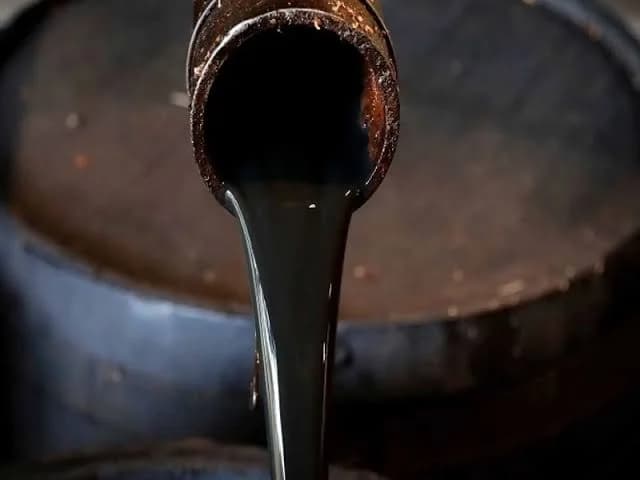
Ghana’s upstream oil and gas sector is currently navigating a dual reality of long-term production decline and an aggressive new recovery phase. According to recent data from the Institute for Energy Security (IES), the country’s crude oil production has fallen for the sixth consecutive year, dropping nearly 50% from its 2019 peak of 71.44 million barrels to a projected 37.30 million barrels in 2025. This downturn has triggered a significant fiscal impact, with total petroleum receipts plummeting by over 43%—from $1.36 billion in 2024 to approximately $770.27 million in 2025. The decline is largely attributed to natural depletion in ageing fields, a lack of replacement reserves, and a hiatus in new petroleum agreements since 2018, which now threatens government infrastructure financing and broader energy security.
Despite these systemic challenges, the sector is showing resilient signs of a rebound driven by intensified drilling and strategic investments. The Jubilee field has recently exceeded production levels of 94,000 barrels per day (bopd) following a successful drilling campaign where five out of six new wells have been completed. Combined with the TEN fields, production has surpassed the 100,000 bopd milestone. To sustain this momentum, the government and its partners have approved the Greater Jubilee Plan, which involves a US$2 billion investment to drill up to 20 new wells. This push is complemented by a strategic reduction in gas prices to $2.50 per MMBtu, a move intended to lower domestic electricity generation costs and support Ghana’s industrialization agenda while transitioning to cleaner energy sources.
On the investment front, the Petroleum Hub Development Corporation (PHDC) has recently signed a landmark Memorandum of Understanding (MoU) with the Al Kaabi Holding Group of Qatar. This partnership aims to accelerate the development of Ghana’s Petroleum Hub, leveraging the country’s stable investment climate and strategic location to attract international capital. While Ghana works to stabilize its output, regional dynamics provide a competitive backdrop; neighboring Nigeria recently reported its highest crude output in over six years, reaching 1.56 million barrels per day in June. Meanwhile, global market volatility remains high, with Brent crude futures surging toward $85 per barrel due to escalating geopolitical tensions in the Strait of Hormuz between the U.S. and Iran.
The path forward for Ghana’s energy sector hinges on its ability to balance immediate production boosts with long-term policy reforms. Industry analysts and the IES emphasize the urgent need for the government to restart petroleum licensing rounds and improve reservoir management to reverse the multi-year decline. While the $2 billion investment in the Jubilee field and the Qatari partnership offer a blueprint for revitalization, stabilizing the sector will require a consistent influx of new agreements and operational efficiency. Achieving these goals is critical not only for restoring government revenues but also for securing the energy future of the nation amidst a volatile global landscape.
This story touches markets covered on Anansi Intelligence ↗.
More from business
Continue exploring similar stories


