••
National Peace Council and International Partners Bolster Ghana’s Security Strategy Against Extremism and Border Crime
•3 min read•11 sources
Ghana is intensifying its national security posture through a multi-faceted approach involving community-led dialogues, international military support, and enhanced border management. The National Peace Council (NPC) and Catholic Relief Services (CRS) have recently launched separate but complementary initiatives aimed at preventing violent extremism (VE) by fostering trust between security agencies and local populations. These efforts, particularly in the Builsa South and North districts and the Northern Region, are designed to create a unified front against the growing threat of extremism in the sub-region. By engaging over 300 community members and security personnel, the NPC—with funding from the UNDP and the embassies of Denmark and Norway—is prioritizing information sharing and community vigilance as the primary defenses against radicalization.
During these dialogues, stakeholders identified several critical vulnerabilities, including rising drug misuse among youth and the proliferation of unregistered firearms. In the Builsa areas, officials warned that substance abuse is increasingly linked to recruitment for violent extremism, urging community leaders to monitor strangers during the farming season and report suspicious activities promptly. Similarly, the CRS-led PoVETSA II project in Tamale has been training representatives from the media, civil society, and security forces to better understand the drivers of extremism. This program emphasizes that national security is not solely the responsibility of the state, but depends on a robust civilian-security partnership rooted in accountability and mutual trust.
Supporting these internal community efforts is a boost in logistical capacity from international allies. The United States Government, through its embassy in Accra, recently donated three heavy-duty Freightliner trucks to the Ghana Armed Forces (GAF) Engineers Training School. Presented by Chargé d’Affaires Rolf Olson to Deputy Minister for Defence Ernest Brogya Genfi, the donation is part of the African Crisis Response Initiative (ACRI). These vehicles are intended to enhance the GAF’s humanitarian response and disaster relief capabilities, supporting non-combat projects such as river dredging, forest rehabilitation, and critical infrastructure development, which are vital for maintaining national stability during emergencies.
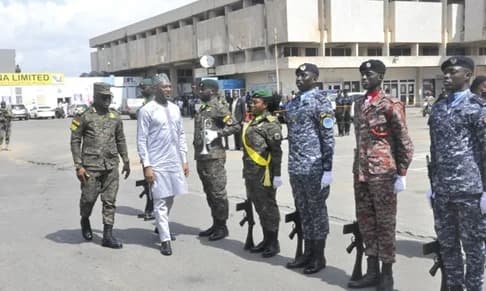
On the front lines of border security, the Minister for the Interior has commended security personnel at the Aflao Border Post for their collaborative efforts in reducing regional crime. During a two-day visit to the Volta Region, the Minister highlighted that teamwork among agencies has been instrumental in addressing human trafficking and the influx of undocumented immigrants. To further secure these transit points, the government has announced plans to install solar lighting along the border and address long-standing logistic and accommodation challenges for immigration officers. These combined efforts—ranging from grassroots community vigilance to high-level military logistics—reflect a comprehensive national strategy to safeguard Ghana’s peace and territorial integrity.
This story touches markets covered on Anansi Intelligence ↗.
More from politics
Continue exploring similar stories


