••
Ghana’s Health Insurance Model Gains International Recognition as NHIA Intensifies Youth Outreach
•2 min read•2 sources
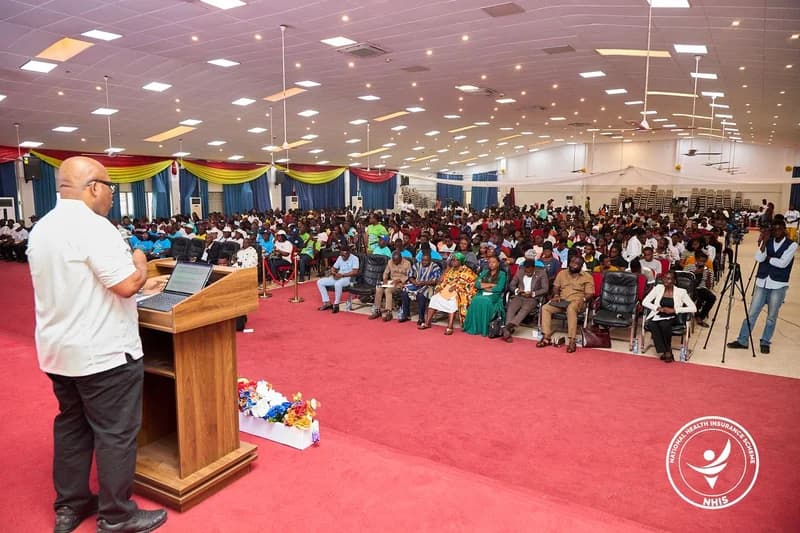
Ghana's National Health Insurance Scheme (NHIS) is emerging as a leading model for health financing in the West African sub-region and beyond. The National Health Insurance Authority (NHIA) is currently navigating a dual mandate: showcasing its successful financing framework to international peers while simultaneously driving domestic enrollment among the youth. This dual approach underscores the scheme's growing influence and its foundational role in ensuring accessible healthcare for all demographics in Ghana.
Internationally, Ghana’s health financing model is being hailed as one of the best among lower-middle-income countries. Dr. Senanu Kwesi Djokoto, the Deputy CEO of the NHIA, recently highlighted that the system's effectiveness has attracted significant interest from other African nations. Specifically, delegations from Chad and Ethiopia are scheduled to visit Ghana to study the NHIS framework and gain insights into its operational successes. This exchange of knowledge positions Ghana as a continental hub for health policy innovation, providing a template for nations seeking to achieve Universal Health Coverage.
Domestically, the NHIA is focusing its efforts on the younger generation through initiatives like the "NHIS Campus Connect." During a recent speech at the University of Cape Coast (UCC) Students' Representative Council (SRC) Week Conference, NHIA CEO Dr. Victor Asare Bampoe emphasized that health insurance is a critical component of a student's holistic well-being. He argued that academic success is inextricably linked to physical health and the accessibility of medical services. By bringing on-site registration to campuses, the NHIA aims to bridge the gap between education and health, ensuring that students are protected against unforeseen medical expenses during their academic careers.
The overarching vision of the NHIA, as articulated by its leadership, is to foster a culture where health insurance is viewed as a basic necessity rather than a luxury. Dr. Bampoe noted that well-being encompasses more than just physical health, requiring a collective effort to ensure that healthcare remains accessible to the youth. As the authority continues to refine its financing model and expand its reach, the focus remains on building a resilient healthcare system that can serve as a beacon for other developing nations while securing the health of Ghana’s future leaders.
This story touches markets covered on Anansi Intelligence ↗.
More from health
Continue exploring similar stories


