••
Ministry of Education Launches 'Teachers for All' Report Highlighting Severe Rural Staffing Shortages and Learning Gaps
•2 min read•4 sources
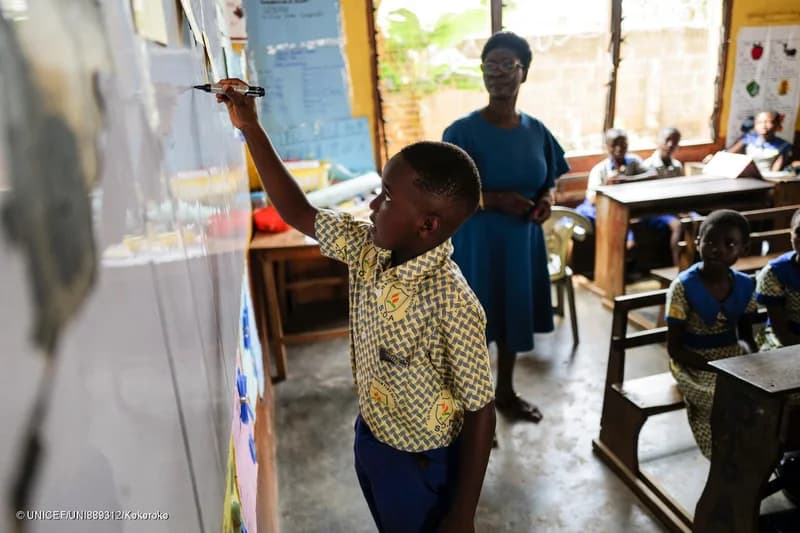
The Ministry of Education, in partnership with UNICEF and the UK Foreign, Commonwealth and Development Office, has released the 'Teachers for All' (T4A) report, revealing a stark paradox in Ghana's education system. While school enrollment has reached near-universal levels—peaking at 99.6% for primary schools and 98.4% for junior high schools during the 2022/23 academic year—severe teacher deployment inequalities are crippling learning outcomes. The report indicates that approximately one in five districts currently faces critical staffing shortages, predominantly in rural areas, which undermines the significant progress made in student accessibility across the country. These staffing gaps are identified as a primary driver of the national decline in educational quality. Detailed findings in the report show that the lack of equitable teacher distribution has directly impacted foundational learning. Over 45% of students currently lack basic proficiency in Mathematics, while more than 50% fail to meet proficiency standards in English. These poor outcomes are most pronounced in regions where pupil-teacher ratios far exceed the national target of 35:1. For instance, the North-East Region reported a ratio of 48:1, creating overcrowded classrooms that prevent effective instruction. The data suggests that while children are physically in school, the absence of qualified educators in underserved districts is stalling their academic development. To address these systemic disparities, the T4A report advocates for a transition toward evidence-based, data-driven teacher deployment strategies. Key recommendations include the introduction of robust incentive packages designed to attract and retain educators in remote communities, with a specific focus on supporting female teachers who often face unique safety and logistical challenges in rural postings. The report emphasizes that refining teacher allocation is not only a matter of social equity but also a fiscal necessity; optimizing distribution is essential to ensure that the government's significant budget investments in education translate into tangible improvements in literacy and numeracy. The Ghanaian government's commitment to implementing these reforms will be a crucial factor in bridging the rural-urban divide in educational quality. By moving beyond enrollment statistics and focusing on the quality of teacher-student engagement, the Ministry aims to ensure that every child, regardless of their geographical location, has access to the qualified instruction necessary for success. This shift toward equitable deployment is viewed as a vital step in securing the country's long-term human capital and economic development.
This story touches markets covered on Anansi Intelligence ↗.
More from education
Continue exploring similar stories


