••
Ministry of Education Overhauls Basic School Curriculum and Standardized Testing to Boost Foundational Learning
•2 min read•5 sources
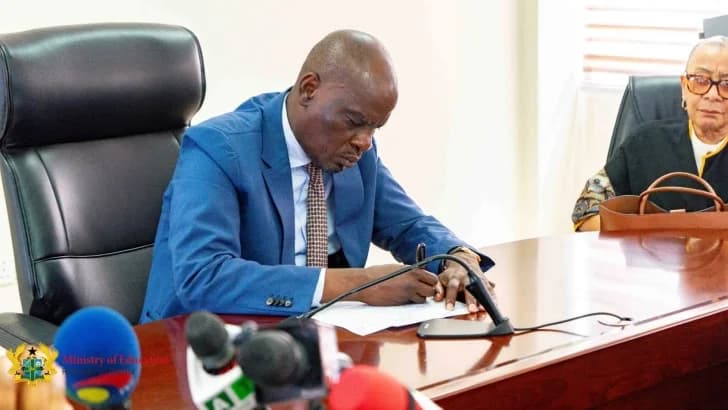
The Ministry of Education, in collaboration with the National Council for Curriculum and Assessment (NaCCA), has launched a comprehensive reform of Ghana's basic education system. This dual-pronged approach includes the introduction of a revised curriculum for kindergarten and primary levels alongside the implementation of the National Standardized Test (NST). These initiatives are designed to modernize the educational framework, focusing on 21st-century skills and ensuring that every pupil achieves foundational proficiency in literacy and numeracy. Minister of Education Haruna Iddrisu highlighted these reforms as a significant achievement toward fostering ethically responsible citizens and preparing Ghanaian students for global opportunities.
Central to this transformation is the National Standardized Test, which Deputy Minister for Education Dr. Clement Abas Apaak clarified is a diagnostic tool rather than a traditional pass-or-fail examination. Speaking during a series of school visits in the Central Region, Dr. Apaak emphasized that the NST is specifically designed to identify learning gaps among pupils in KG2, P2, P4, and P6. By measuring foundational skills in literacy and numeracy, the assessment provides teachers and education officials with the data needed to offer targeted support. Crucially, the Minister reassured parents and students that the results would not lead to students repeating classes, but would instead inform instructional improvements to ensure no child is left behind.
The revised curriculum, which has now been expanded to include 13 subject areas from kindergarten to Primary Six, introduces several significant pedagogical shifts. Key updates include the integration of Citizenship Education and the modernization of Mathematics and Computing as integrated subjects. Furthermore, the new framework prioritizes early foreign language instruction, with Arabic and Chinese being introduced as early as Primary One. These changes aim to reduce subject overload while grounding students in their native languages and preparing them for a competitive international environment through a play-based approach to teaching English and other languages.
This educational overhaul signals a move away from rote learning toward task-based and formative assessment methodologies. By shifting the focus of national assessments toward identifying and addressing specific learning deficiencies early in a child's development, the Ministry of Education aims to improve overall learning outcomes across the country. As these reforms take hold, the government continues to encourage parents and educators to embrace the new standards, which are intended to produce a more skilled, ethically grounded, and globally competitive generation of Ghanaian youth.
This story touches markets covered on Anansi Intelligence ↗.
More from education
Continue exploring similar stories


