••
Academic Leaders Propose Strategic Reforms for Ghana’s Judiciary, Textile Industry, and Digital Libraries
•3 min read•6 sources
Academic experts from various Ghanaian universities have issued a series of calls for structural reforms, historical reflection, and technological modernization to drive national development. During a series of lectures and keynote addresses, prominent scholars emphasized the need for Ghana to look both inward at its history and forward toward emerging technologies. From the 150th anniversary of the Supreme Court to the revival of the textile industry and the digital transformation of libraries, these experts provided roadmaps for institutional growth and self-reliance in the face of global challenges.
Prof. Philip Ebow Bondzi-Simpson, former Rector of GIMPA, highlighted the 150-year evolution of Ghana’s judicial system during the Supreme Court @150 Anniversary lecture series. He traced the judiciary's roots back to the 1876 Supreme Court Ordinance, which initially established a jurisdiction spanning British West Africa, including Sierra Leone and parts of Nigeria. Bondzi-Simpson emphasized the importance of understanding the layered historical influences—including colonial governance, the impact of military regimes on judicial independence, and the enduring role of customary law—as essential foundations for shaping a modern, decolonized legal framework for the Fourth Republic.
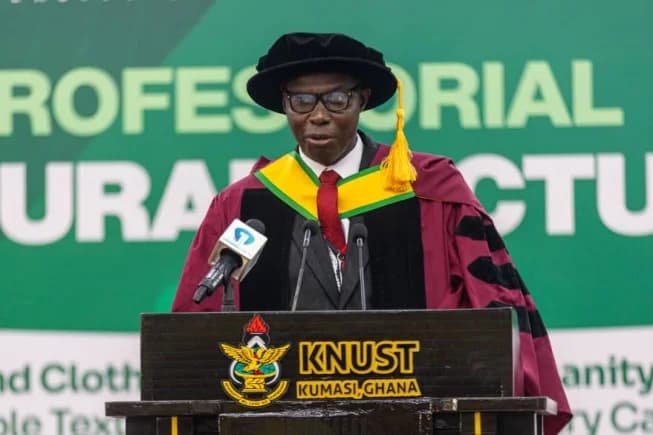
In the industrial sector, Professor Ebenezer Kofi Howard, Vice-Dean at KNUST, advocated for a sustainable raw material base to revive Ghana’s textile and apparel production. Delivering an inaugural lecture, he noted that over 70% of textiles are currently imported, contributing to a significant decline in local production capacity and employment. To combat this, Howard proposed restructuring the National Cotton Development Authority and establishing an "Industrial Dyes Park" to foster local innovation. He urged the government to implement a revised textiles policy that draws on the success of nations like Vietnam and Bangladesh to reduce import dependency and strengthen the economy.
Parallel to these industrial and legal reforms, Professor Monica Mensah Danquah called for the modernization of libraries during UNIMAC Library Week. She stressed that libraries must evolve from simple information repositories into active hubs of innovation by integrating emerging technologies like artificial intelligence. Danquah outlined five key priorities: enhancing digital infrastructure, training staff, integrating AI, expanding digital resources, and fostering collaboration. This push for digital inclusion aims to ensure that educational institutions remain relevant and capable of meeting the needs of a rapidly changing technological landscape.
Collectively, these expert recommendations signal a crucial phase in Ghana's development, where academic insight is being directly applied to national challenges. By addressing the historical complexities of the judiciary, the economic vulnerabilities of the textile industry, and the digital gaps in education, these leaders are calling for a coordinated effort between policymakers and experts. The implementation of these proposals would not only strengthen Ghana’s institutional foundations but also pave the way for a more self-sufficient and technologically advanced nation.
This story touches markets covered on Anansi Intelligence ↗.
More from education
Continue exploring similar stories


