••
Government Expands Infrastructure and Social Safety Nets Amid Growing Economic and Accountability Concerns
•3 min read•16 sources
The Ghanaian government and various political stakeholders have announced a series of major infrastructure and policy initiatives aimed at addressing the nation’s transportation, education, and social resilience challenges. Key among these is the arrival of the first batch of 100 new 29-seater buses, part of a 300-vehicle procurement plan intended to alleviate commuter pressure and stabilize fares in major urban centers like Accra. Minister Felix Kwakye Ofosu and Vice President Jane Naana Opoku-Agyemang confirmed that the remaining 200 buses are scheduled for delivery in August and November, marking a significant effort to improve mobility for daily commuters who have faced chronic shortages during peak hours.
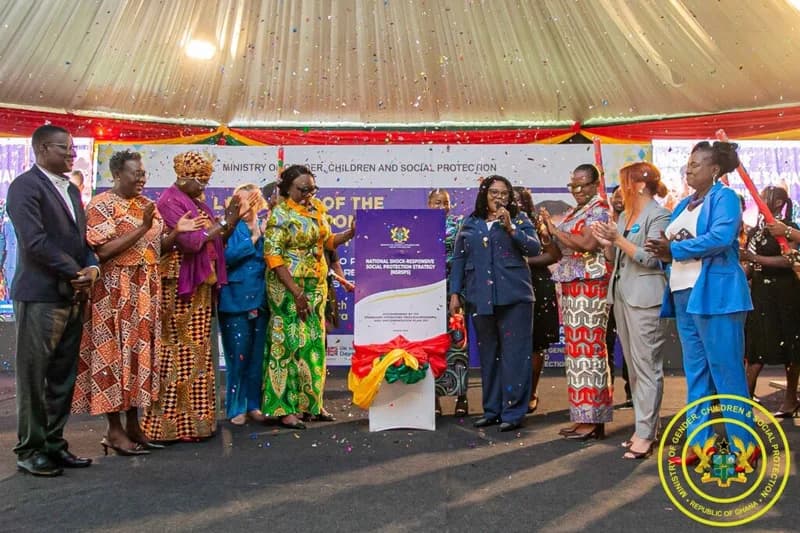
In the realm of social and educational development, the Ministry of Gender, Children and Social Protection has launched the National Shock-Responsive Social Protection Strategy (NSRSPS). Minister Agnes Naa Momo Lartey emphasized that the strategy, themed "From Preparedness to Resilience," aims to create a coordinated framework to safeguard the livelihoods of women, children, and persons with disabilities during crises such as climate change and pandemics. Simultaneously, the government has finalized a $92 million financing agreement for the University of Engineering and Agricultural Sciences (UEAS) in Bunso, while youth in the Jomoro Municipality have celebrated the establishment of the constituency’s first-ever College of Education, a project expected to boost local academic and economic growth.
Infrastructure progress is also being highlighted at the local level, where the Member of Parliament for Kpando, Sebastian Deh, announced the commencement of the long-awaited Kpando–Torkor feeder road. Representing the National Democratic Congress (NDC) under its "Big Push" agenda, Deh noted that the road is pivotal for connecting local markets and improving access to healthcare and education. This development is supported by the local assembly’s deployment of earth-moving equipment to enhance inner roads, reflecting a broader commitment to socio-economic development within the Volta Region.
However, these developmental milestones are being met with scrutiny from labor and industry leaders regarding economic priorities and accountability. Abraham Koomson, Secretary-General of the Ghana Federation of Labour (GFL), has urged the government to prioritize the burgeoning tomato supply crisis over political appointments, such as the filling of the Defence Minister vacancy. With Ghana spending between $600 million and $1.4 billion annually on tomato imports, the Chamber of Agribusiness has called for an import suspension to protect local farmers. Additionally, Koomson raised concerns over the slow pace of prosecutions under "Operation Recover All Loot" (ORAL), warning that delays in the Attorney-General’s office may undermine public confidence in government accountability and the fight against corruption.
This story touches markets covered on Anansi Intelligence ↗.
Related topic
NDC (National Democratic Congress): Latest News →More from politics
Continue exploring similar stories


