••
Ghana's Infrastructure Rated 'Poor to Fair' as Engineers Call for $1.2 Billion Aviation Investment and Solar Expansion
•3 min read•7 sources
Ghana’s national infrastructure has received a D3 rating—categorized as “Poor to Fair”—in the 2026 Ghana Infrastructure Report Card released by the Ghana Institution of Engineering (GhIE). With an overall score of 2.83 out of 5, the assessment highlights a landscape of chronic underfunding, a weak maintenance culture, and significant governance challenges across eight critical sectors. While aviation emerged as the top performer with a C3 (71%) grade, other sectors such as roads and railways saw alarming declines, hitting E1 ratings of 50% and 48% respectively. The GhIE warns that without systemic reforms, including the establishment of a National Infrastructure Council, the country risks losing its competitive edge in the West African sub-region.
In the aviation sector, Ing. Dr. Patrick Amoah Bekoe, Vice-President of the GhIE, revealed that over $1.2 billion in infrastructure investment is required to bridge existing funding gaps and meet future demand. Despite leading the report card due to recent safety improvements and upgrades at Kotoka International Airport, the sector still faces a 40% funding deficit. Dr. Bekoe emphasized that closing this gap is essential for Ghana to solidify its status as a regional aviation hub and to foster the connectivity necessary for broader economic growth. This call for capital injection aligns with the report’s finding that no single infrastructure sector in Ghana currently scores above a D1 in funding adequacy.
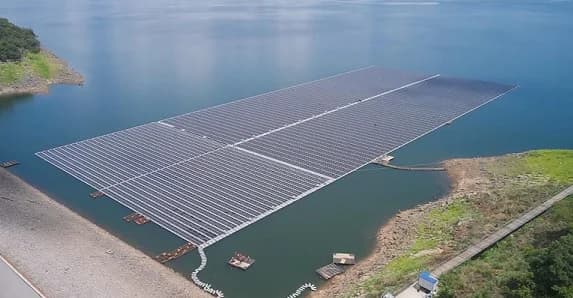
Contrasting the funding challenges in transportation, the energy sector is poised for a significant boost with the commencement of the 1,500-megawatt Buipe Solar Power Project in August 2026. Presidential Advisor Augustus Goosie Tanoh announced that the first phase of the initiative, part of the government’s 24-Hour Economy and Accelerated Export Development Programme, aims to dramatically lower industrial electricity costs from the current 18-23 cents to between 7-9 cents per kilowatt-hour. The project will incorporate battery energy storage to ensure reliability, directly addressing the financial and reserve margin issues that limited the electric power sector's score to a D1 (66%) in the GhIE assessment.
Parallel efforts to improve essential services are also underway in the water and road sectors. A delegation led by Togbe Afede XIV and Strategic Initiatives Limited recently assessed the Kpeve Water Treatment Plant for expansion to meet the growing demand for safe drinking water in the Volta Region. Meanwhile, road construction consultant Ing. Kwabena Bempong has advocated for a fundamental shift in road project planning. Following a decline in the road sector's rating, Bempong urged authorities to schedule major works outside the rainy season and prioritize sophisticated drainage systems, such as cross culverts, to prevent flood-related damage and minimize disruptions for motorists on key highways like the Accra-Winneba Road.
Ultimately, the 2026 Infrastructure Report Card serves as a call to action for increased collaboration between the government, private sector, and development partners. The GhIE recommends that Ghana move beyond ad-hoc maintenance toward a structured, data-driven approach to infrastructure management. By integrating strategic projects like the Buipe Solar plant and the Kpeve expansion with systemic reforms in funding and maintenance, the nation can address its current infrastructure crisis and build the resilient foundations necessary for sustainable socio-economic development.
This story touches markets covered on Anansi Intelligence ↗.
More from business
Continue exploring similar stories


