••
Ghana Advances Educational Reforms and Capacity Building Across Professional and Basic Sectors
•3 min read•12 sources
Ghana's educational landscape is undergoing a significant transformation as various stakeholders implement reforms focused on professional specialization, institutional discipline, and infrastructure development. The Ministry of Health (MoH) has launched a comprehensive reform package to strengthen health training institutions, including the introduction of PhD scholarships for nursing instructors and the rollout of a Bachelor of Science in public health nursing across 14 colleges. During a conference in Ejusu, Deputy Health Minister Dr. Grace Ayensu-Danquah emphasized the need for transparent admission processes and high standards to address unemployment concerns within the allied health sector. Complementing these academic advancements, the legal sector recently welcomed 133 newly sworn-in Notaries Public. Chief Justice Paul Baffoe-Bonnie and GBA President Afua Ghartey charged these professionals to uphold integrity and resist external pressures while meeting the growing demand for notarial services in an increasingly globalized economy.
At the basic and secondary education levels, the focus has shifted toward improving the learning environment and addressing social challenges. In Nkoranza South, Municipal Chief Executive Hon. Godfred Dapaa presented 760 dual and mono desks to the Municipal Directorate of Education to alleviate furniture deficits in 26 public schools, including Nkoranza Model Primary. Beyond physical infrastructure, the Ministry of Education is preparing for a National Dialogue on Discipline to combat a rising tide of vandalism, bullying, and exam malpractice. Minister Haruna Iddrisu has called for a collective effort involving parents and communities to ensure that schools nurture both character and knowledge, advocating for early educational interventions to foster responsible citizenship.
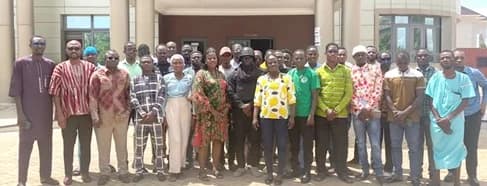
Professional development and workforce readiness are also taking center stage through targeted training initiatives. The National Service Personnel Association (NASPA) recently clarified a GHS 60 deduction from service allowances, explaining that the funds are dedicated to a Capacity Building Programme designed to enhance post-service employability. Although the program faced initial pushback, NASPA is engaging with personnel to ensure transparency and explore alternative funding models. Similarly, in the Upper East Region, thirty journalists were equipped with conflict-sensitive reporting skills in a workshop organized by FactSpace West Africa, UNICEF, and UNESCO. This training focused on fact-checking and ethical reporting to prevent misinformation from inflaming regional tensions.
Finally, youth engagement initiatives are bridging the gap between education and community action. The Kumasi Metropolitan Assembly (KMA) has opened applications for a US$50,000 Youth Climate Action Fund, backed by Bloomberg Philanthropies, to support innovators aged 15-24 in developing local climate solutions. On the spiritual and community front, the Evangelical Presbyterian Church, Ghana (EPCG) is gearing up for its National Youth Week from August 1 to 9, 2026. Under the theme "Godly and Clean Generation – Building the Church," the event will feature symposiums and fundraising activities aimed at empowering the youth to prioritize national and spiritual development over personal comfort. Collectively, these initiatives represent a multi-sectoral commitment to equipping the next generation of Ghanaians with the tools necessary for professional and civic success.
This story touches markets covered on Anansi Intelligence ↗.
More from education
Continue exploring similar stories


