••
Ghana Statistical Service Warns of Youth Unemployment Crisis as Nearly 2 Million Remain Out of School and Work
•3 min read•9 sources
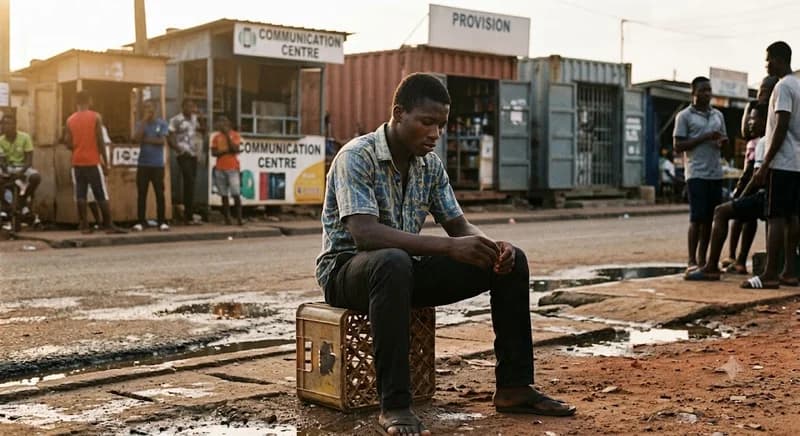
The Ghana Statistical Service (GSS) has raised a significant alarm regarding the nation's future, revealing that nearly two million young Ghanaians aged 15 to 35 are currently Not in Education, Employment, or Training (NEET). This figure represents 19.5% of the youth population, highlighting a critical gap in the country's ability to utilize its growing demographic. Released in observance of World Population Day on July 28, 2026, the report indicates that youth unemployment has soared to 21.9%, a rate nearly double the national average of 12.8%. With young people making up 36.9% of Ghana's total population of 33.7 million, the GSS warns that failing to address these disparities could undermine long-term economic stability.
Data from the GSS further details sharp regional disparities, with the Greater Accra Region recording the highest youth unemployment rate at 31.9%. The Central and Ashanti regions follow closely at 27.4% and 27.2%, respectively. Beyond economic factors, social barriers continue to impede progress for young women; the report found that 15% of girls aged 15 to 19 have experienced pregnancy, a factor that significantly hinders their access to education and the formal labor market. These statistics emphasize that the youth crisis is not merely a lack of jobs but a complex intersection of regional neglect, educational gaps, and social challenges that require targeted interventions.
In response to these pressing figures, the National Development Planning Commission (NDPC) has launched a three-day workshop in Accra to develop a comprehensive Human Capital Development Strategy. The workshop, supported by Africa HCD+, brings together experts and stakeholders to address gaps in Ghana’s Human Capital Index. NDPC Director-General Dr. Audrey Smock Amoah emphasized the need for people-centered policies, while the Minister of Public Sector Reform, Madam Lydia Lamisi Akanvariba, highlighted the strategy's role in equipping the youth with the technical skills necessary to survive in a modern economy. This initiative aims to create a roadmap for improving health and education outcomes to ensure that the workforce is both productive and resilient.
To move forward, the GSS and policy experts are advocating for a massive scale-up in vocational training, entrepreneurship support, and stronger school-to-work transition programs. Madam Finda Koroma, CEO of Africa HCD+, called for dedicated research data to ensure that development strategies are evidence-based and aligned with the Sustainable Development Goals (SDGs). As the government under President John Mahama continues its term, the focus remains on transforming the "youth bulge" from a potential risk into a productive engine for growth. The consensus among officials is that immediate, heavy investment in the skills and health of the youth is the only path toward achieving sustainable economic independence.
This story touches markets covered on Anansi Intelligence ↗.
Related topic
John Mahama: Latest News & Updates →More from education
Continue exploring similar stories


