••
Ghanaian Governance and Social Reform: Institutional Shifts, Education Crises, and the Call for Ethical Leadership
•3 min read•42 sources
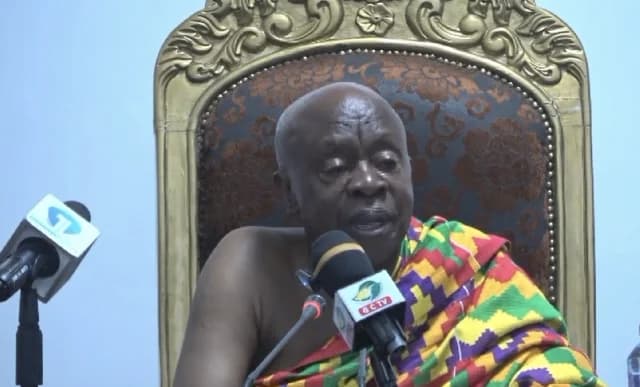
Ghana is currently navigating a period of significant institutional restructuring and social reform, marked by a push for greater autonomy among traditional authorities and a series of transformative measures in the education and health sectors. The National House of Chiefs has formally proposed moving its oversight directly under the Presidency at Jubilee House, arguing that its current placement within the Ministry of Local Government compromises its constitutional independence. This move for autonomy coincides with a stern call from the Asantehene, Otumfuo Osei Tutu II, who challenged the nation’s youth to reject corruption and unethical wealth accumulation. Speaking at the Ghana Business Leaders Conclave, the Asantehene emphasized that true greatness should be measured by service and integrity rather than material gain, a sentiment echoed by the Developing Women for Mobilisation (DWM) as they marked 44 years of advocacy for gender parity and affirmative action.
In the education sector, the government is implementing far-reaching changes through the Legal Education Act, 2026 (Act 1170), which decentralizes law practice training beyond the Ghana School of Law and establishes a new Council for Legal Education and Training. While the Students Loan Trust Fund (SLTF) has successfully cleared fees for over 70,000 first-year students under the 'No Academic Fees' initiative, researchers are warning against a hasty phase-out of the double-track system. Dr. Barnabas Addai Amanfo cautioned that the $300 million STAR-J initiative must be data-driven to avoid the pitfalls of historical procurement delays. Simultaneously, a growing hostel crisis is threatening access to higher education, with Chancellor Dr. Paul Kofi Fynn and Rent Commissioner Frederick Opoku reporting that fees have soared between GHC7,000 and GHC24,000, prompting calls for pension funds to be leveraged for affordable student housing.
On the frontlines of public service and community development, there is a visible emphasis on discipline and infrastructure. The Civil Service Council recently commended the Ministry of Interior for its punctuality and dedication to the government’s 'Resetting Agenda,' while the Customs Division has been urged to be more proactive in revenue mobilization. In the Upper West Region, the Nadowli-Kaleo District Assembly commissioned new model Kindergarten blocks and CHPS compounds to alleviate overcrowding and improve healthcare accessibility. This regional progress is further supported by the training of 90 police officers in community policing and conflict prevention, aimed at building public trust and addressing emerging security threats in West Africa.
Despite these advancements, significant challenges remain in the health sector and administrative efficiency. Former Adentan MP Kojo Adu Asare’s public struggle with end-stage renal disease—costing approximately GH‵8,000 monthly for dialysis—has highlighted the urgent need for better subsidies and professional renal care. While the National Health Insurance Authority (NHIA) exceeded its coverage targets in the Volta Region, achieving 103.2% of its goal, individual health crises continue to strain the social safety net. Furthermore, the Ministry of Foreign Affairs has introduced stricter policies to cancel incomplete passport applications after two months to streamline operations. Moving forward, the success of Ghana’s national transformation will depend on the effective partnership between traditional leaders, the civil service, and the government to ensure that infrastructure development is matched by ethical governance and sustainable funding models.
This story touches markets covered on Anansi Intelligence ↗.
Related topic
Ghana Customs Recruitment: Latest News & Updates →More from politics
Continue exploring similar stories


