••
Ghana’s Galamsey Fight: Coalition Challenges Government Claims as International Support for Responsible Mining Grows
•3 min read•7 sources
The Ghana Coalition Against Galamsey (GCAG) has intensified its scrutiny of the government’s efforts to combat illegal mining, openly challenging official narratives of success. Convenor Kenneth Ashigbey recently expressed grave concerns over what he described as an ongoing 'era of impunity,' characterized by selective enforcement and persistent lawlessness. The coalition highlighted that illegal activities continue to devastate water bodies and forest reserves, particularly in the Eastern Region. They are calling for more rigorous prosecution of individuals across the political spectrum and have raised alarms regarding potential corruption within the National Anti-Illegal Mining Operations Secretariat (NAIMOS). This criticism stands in contrast to recent statements from the Ministry of Lands and Natural Resources, which denied receiving formal reports of local assemblies (MMDAs) authorizing the illegal use of heavy equipment, despite investigative reports suggesting otherwise.
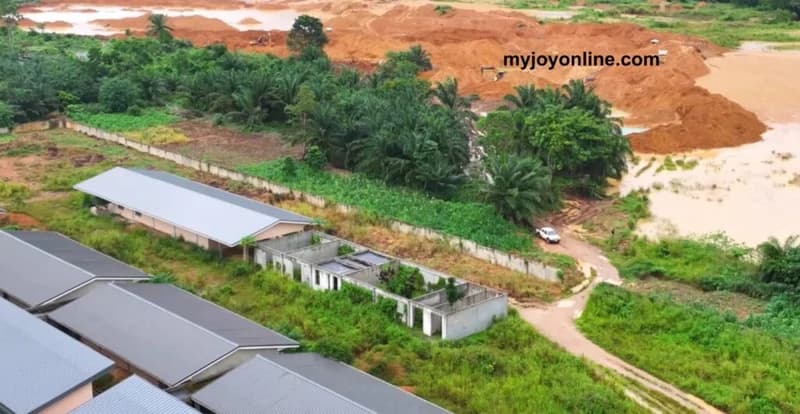
Concrete enforcement actions have, however, been recorded on the ground. In the Ashanti Region, National Security operatives recently arrested two suspects, including Yussif Ibrahim, for operating an illegal mining site in dangerously close proximity to the Agenda 111 hospital project in Adansi Asokwa. The mining activities were occurring within five meters of the hospital’s walls, causing significant land degradation. In response, the Regional Security Council (REGSEC) has partnered with environmental groups like the Logeist EcoReclaim Initiative and Agricentric Ventures to reclaim the site. While over 80% of the degraded land has been restored, officials admit that illegal miners continue to attempt operations in the area, necessitating constant surveillance.
Amidst these challenges, the government has received praise for recent policy shifts aimed at conservation. The Journalists for Responsible Fisheries and Environment (JRFE) lauded the revocation of Executive Instrument 144, which effectively restored the legal status of the Achimota Forest as a Forest Reserve. This move is being hailed as a vital victory for biodiversity and climate resilience. Environmental advocates are now urging the government to strengthen legal safeguards to prevent any future declassification of forest lands and to increase investment in ecological management plans to protect these vital carbon sinks from further encroachment.
On the economic front, the World Gold Council (WGC) has signaled international confidence in Ghana’s potential for reform by committing an initial US$250,000 as part of a larger US$1 million support package. This funding, formalised through a Memorandum of Understanding with the Ministry of Lands and Natural Resources, aims to clean up the artisanal and small-scale mining (ASM) sector. The initiative focuses on the 'Responsible Cooperative Mining Scheme Development Programme' (rCOMSDEP), which seeks to register mining cooperatives, establish trusted gold processing facilities, and improve the traceability of gold to reduce illicit trade. WGC Chairman David Tait noted that these reforms could serve as a global model for responsible mining.
While the influx of international support and the restoration of forest reserves offer a glimmer of hope, the road ahead remains complex. The juxtaposition of high-level policy commitments against reports of local complicity and brazen mining near critical infrastructure underscores the need for a more transparent and unified national strategy. For the fight against galamsey to be truly effective, the government must reconcile its regulatory frameworks with the realities on the ground, ensuring that environmental protection and legal accountability take precedence over political and economic interests.
This story touches markets covered on Anansi Intelligence ↗.
Live rates
Ghana gold price →More from politics
Continue exploring similar stories


