••
GNCCI and Economists Sound Alarm as Floods Paralyse Businesses and Drain Billions from Ghana’s Economy
•3 min read•4 sources
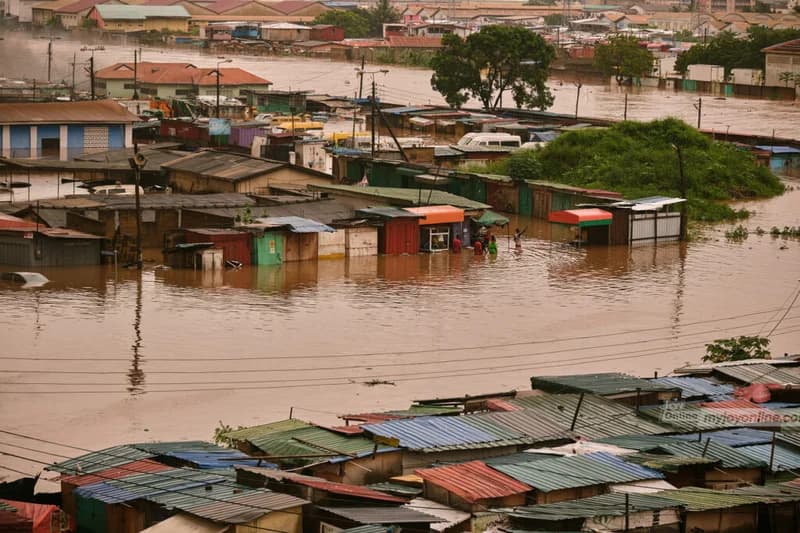
The recent floods in Ghana have sparked a dual crisis of human tragedy and economic stagnation, with the Ghana National Chamber of Commerce and Industry (GNCCI) warning of prolonged business closures. GNCCI Chief Executive Mark Badu Aboagye revealed that many employees of member companies may need to remain home while businesses struggle to salvage raw materials and damaged stock. This operational halt follows devastating floods that claimed at least 18 lives and caused extensive property destruction across Accra and the Central Region, highlighting the extreme vulnerability of Ghana’s industrial and commercial sectors to seasonal environmental shocks.
The financial ripples of the disaster are being felt across the banking and insurance industries as they move to mitigate the damage. Ernest Frimpong of Bedrock Insurance has assured affected clients that the industry is working to expedite claims processing, targeting a five-day turnaround for those who provide complete documentation. Simultaneously, John Awuah, representing the Ghana Bankers Association, indicated that banks are prepared to renegotiate loan terms for distressed businesses, drawing on relief strategies used during the COVID-19 pandemic. However, manufacturing firms remain particularly vulnerable, as the loss of raw materials and production capacity creates a bottleneck that insurance and credit relief can only partially address.
Prominent economist Prof. Peter Quartey has offered a scathing critique of the situation, describing the flooding as a manmade issue that is effectively killing the economy through lost productivity and massive traffic congestion. He estimates that the country is losing billions of cedis due to ineffective infrastructure and poor urban planning. Prof. Quartey pointed out that while significant public and donor funds have been funneled into drainage and Water, Sanitation, and Hygiene (WASH) projects, the results remain dismal. He attributed this failure to poorly executed engineering works and a systemic lack of law enforcement regarding sanitation, which leads to obstructed waterways and recurring disasters.
The path toward recovery necessitates a radical shift in local governance and a departure from current reactive measures. Industry leaders and economists emphasize that the recurring nature of these floods points to a failure in enforcement and waste management. To safeguard the economy against future disruptions, experts have called for stricter application of laws to prevent the obstruction of water channels and a more strategic approach to infrastructure investment. Without these reforms, the cycle of property loss, business interruptions, and tragic loss of life will continue to drain Ghana’s national resources and stifle long-term economic growth.
This story touches markets covered on Anansi Intelligence ↗.
More from business
Continue exploring similar stories


