••
Central and Western Regions Devastated by Floods: 18 Dead and Thousands Displaced Following Building Collapses
•2 min read•9 sources
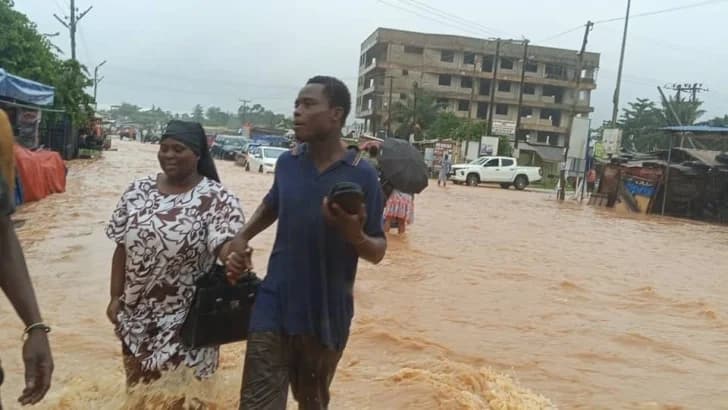
Torrential rainfall has left a trail of destruction across Ghana’s Central and Western regions, resulting in at least 18 fatalities and the displacement of thousands of residents. The National Disaster Management Organisation (NADMO) reports that the Central Region has been particularly hard-hit, with 58 building collapses recorded across 15 districts. The disasters, triggered by persistent heavy downpours, have affected over 5,000 individuals, many of whom have lost their homes, belongings, and livelihoods. In the Western Region town of Samreboi, the situation is equally dire, with over 2,000 people displaced as overflowing rivers submerged entire neighborhoods.
The human toll of the disaster has been profound, marked by the tragic death of 20-month-old Hanson Mensah in a rain-induced mudslide at Tantri, Cape Coast. Other casualties include 12-year-old Anastasia Abakah and 40-year-old Adwoa Baduwa, who were killed when their home collapsed. NADMO officials have identified human activities as a primary driver of the severity of these floods. Emmanuel Kwesi Dawood, a NADMO Director, noted that encroachment on natural water channels and the blockage of drainage systems with refuse have prevented the free flow of water, leading to unprecedented flooding in urban centers like Cape Coast.
In the Western Region, Western Regional Minister Joseph Nelson has attributed the flooding in Samreboi to environmental degradation caused by illegal mining activities, known locally as galamsey. Despite the scale of the displacement, the Minister assured the public that a coordinated response between the district assembly and NADMO is underway. Relief items, including food, mattresses, and bedding, are being distributed to the 2,000 displaced persons currently seeking refuge in local schools and temporary shelters. However, local residents continue to express concern over the lack of long-term infrastructure to manage the recurring threat of seasonal floods.
In response to the crisis, NADMO has issued a final 14-day evacuation order for occupants of structurally weak and dilapidated buildings across the Central Region. Authorities have warned that buildings identified as unsafe will be demolished at the owners' expense if they are not vacated voluntarily. While NADMO is coordinating with state agencies to fumigate affected areas and prevent disease outbreaks, the organization has admitted that a lack of adequate funding is hindering comprehensive disaster prevention measures. Moving forward, authorities are under increasing pressure to enforce building regulations and improve national drainage systems to mitigate the impact of future weather events.
