••
Ghana Records $2.62bn FDI in 2025 Amid Calls for Productive Investment and Transparency Over $1.7bn Gold Program Losses
•3 min read•3 sources
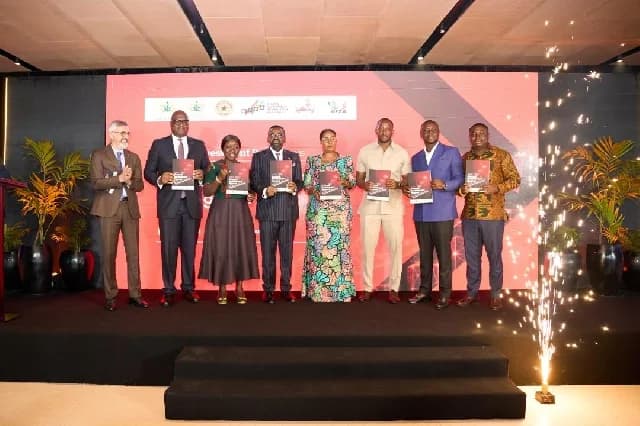
Ghana's investment landscape in 2025 presents a complex picture of robust foreign interest tempered by urgent calls for structural reform and greater fiscal accountability. The country successfully secured approximately $2.62 billion in Foreign Direct Investment (FDI), a figure widely viewed as a sign of continued international confidence despite prevailing economic challenges. However, government officials and economic think tanks are now pushing for a strategic pivot, moving beyond the mere attraction of capital toward securing "productive investments" that explicitly enhance local production, create quality jobs, and facilitate technology transfer.
Speaking at the launch of the Ghana Investment Promotion Authority’s (GIPA) 2025 Annual Investment Report, the Minister for Trade, Agribusiness, and Industry, Elizabeth Ofosu-Adjare, emphasized that the true measure of success lies in economic impact rather than raw capital totals. She advocated for a more robust regulatory environment and improved tracking of machinery investments to ensure that capital inflows translate into tangible productivity. This sentiment was echoed by Latif Abdul Oduro, Deputy CEO of the Ghana Free Zones Authority (GFZA), who argued that investment promotion must focus on developing productive capacity and boosting exports to ensure long-term economic stability.
Supporting this shift toward impact-driven growth, Bank of Ghana Governor Johnson Asiama underscored the necessity of measuring investments by their effects on living standards and employment. While noting that a decline in inflation has helped restore market confidence, the Governor maintained that the qualitative nature of capital is paramount. The consensus among financial leadership suggests that the regulatory framework must evolve to prioritize sectors that provide sustainable value and support the broader goal of economic transformation under the current administration.
Despite these positive investment trends, the Institute of Economic Research and Public Policy (IERPP) has raised significant concerns regarding the Domestic Gold Purchase Program (DGPP). Professor Isaac Boadi, Executive Director of the IERPP, cautioned that the $2.62 billion FDI inflow is significantly offset by reported losses of $1.7 billion (GH’’22 billion) within the DGPP. Representing roughly 65% of the total FDI gain, these losses have prompted calls for urgent transparency and better resource management. The IERPP warns against complacency, urging state institutions to be as accountable for financial losses as they are eager to celebrate investment milestones.
As Ghana moves forward, the focus remains on balancing the celebration of foreign capital with the realities of domestic program management. The path to sustainable economic transformation will likely depend on whether the government can successfully implement the regulatory reforms suggested by Minister Ofosu-Adjare while addressing the fiscal leakages identified by economic watchdogs. Ensuring that future capital inflows lead to high-quality jobs and technological advancements remains the primary challenge for the nation's economic planners in the coming year.
Live rates
Ghana gold price →