••
Ghanaian Entrepreneurs Secure Major Support through Global Scaling Programmes and Emergency Relief
•3 min read•4 sources
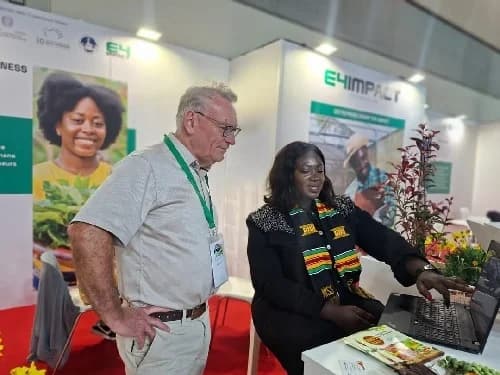
The Ghanaian entrepreneurial landscape is witnessing a significant surge in targeted support, ranging from international scaling initiatives to emergency relief for local artisans. These developments, led by the E4Impact Foundation, Standard Chartered Bank, and Bawa-Rock Limited, address critical gaps in SME growth, gender-inclusive innovation, and disaster recovery. Together, they underscore a multi-sectoral commitment to strengthening the private sector, which remains a vital pillar of the national economy under the current administration.
To drive long-term structural growth, the E4Impact Foundation has partnered with Italy’s Università Cattolica del Sacro Cuore to launch the "Growth for SMEs Programme" (GSP). Hosted at the University of Professional Studies, Accra (UPSA), this six-month initiative is designed to transform established Ghanaian enterprises into market leaders through practical training, mentoring sprints, and B2B matchmaking. The program, which includes business missions to Italy and Kenya, aims to remove structural barriers to scaling. Vice-Chancellor Professor John Kwaku Mensah Mawutor and Italian Ambassador Laura Ranalli emphasized that the initiative provides the essential tools and global exposure necessary for local businesses to thrive in competitive markets.
Simultaneously, the drive for technological innovation has seen ten female entrepreneurs graduate from the sixth cohort of the Standard Chartered Foundation Women in Tech Accelerator. Implemented by the Ghana Climate Innovation Centre (GCIC), the programme awarded GH₵113,500 each to five top ventures—Edu3Dcation, WADMET, Verte Tower, SisiMarie, and Porducare—to advance their climate-smart and tech-driven solutions. Xorse Godzi of Standard Chartered reaffirmed the bank's dedication to empowering female leadership, noting that the accelerator has already supported 83 women-led businesses and generated GH₵3.9 million in revenue, marking a significant impact on Ghana’s innovation ecosystem.
Beyond long-term development, corporate entities are also stepping in to ensure business continuity during local crises. Bawa-Rock Limited recently launched a GH₵1.5 million relief package for over 300 victims of a devastating fire at the historic Obuasi Town Hall, which severely impacted the livelihoods of local tailors and seamstresses. The intervention provided industrial sewing machines and cash aid to 65 master artisans and 110 apprentices, alongside financial support for other affected shop owners. Faustilove Appiah Kannin, the Municipal Chief Executive for Obuasi, commended the private sector’s role in restoring the informal economy following such setbacks.
These combined efforts from international foundations, financial institutions, and local companies reflect a comprehensive approach to economic resilience in Ghana. As the government continues to foster an enabling environment for business, such private and non-profit interventions are crucial for driving innovation and ensuring that small-scale entrepreneurs can withstand economic shocks. Collectively, these programs provide both a safety net and a growth ladder for Ghanaian businesses across diverse sectors and demographics.

