••
Ghana’s Education and Labor Sectors Navigate AI Integration Amid Calls for Human-Centric Innovation
•3 min read•7 sources
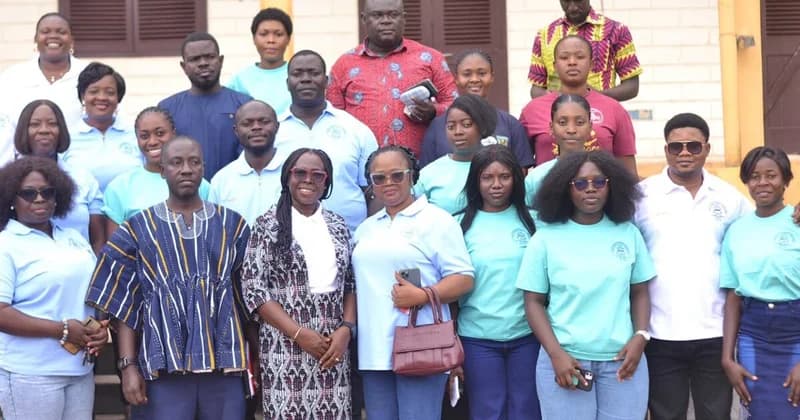
As Artificial Intelligence (AI) continues to reshape the global landscape, stakeholders across Ghana’s education and employment sectors are emphasizing a balanced approach that pairs technological proficiency with indispensable human qualities. From national job fairs to university lecture halls, a consensus is emerging: while AI is an essential tool for the future, it cannot replace the empathy, ethics, and critical thinking that define human interaction and professional excellence. This shift comes at a critical time for Ghana, where the youth unemployment rate for those aged 15-24 stands at 32.5%, and the demand for future-ready skills is higher than ever.
At the 2026 Design and Technology Institute (DTI) Jobs & Opportunities Fair in Accra, Constance Swaniker, the institute's Founder and President, urged the youth to embrace AI as a catalyst for growth rather than a threat. Highlighting global projections, Swaniker noted that while AI and automation may displace 85 million jobs by 2030, they are simultaneously expected to create 97 million new roles. This sentiment was echoed by Deputy Minister Mohammed Adams Sukparu during the 2026 E-Learning Awareness Week at the Kwame Nkrumah University of Science and Technology (KNUST). Sukparu called for a robust collaboration between academia, industry, and government to build a digital economy rooted in ethical AI deployment and inclusive infrastructure.
However, the rapid adoption of AI has also sparked a vital conversation about the limits of technology in the classroom. At the launch of the Social Sciences Students Association (SOSSA) at Agogo Presbyterian Women’s College of Education, Bosco Aboagye, a lecturer from St Monica’s College of Education, reminded future teachers that digital skills alone are insufficient. Aboagye argued that while AI aids learning, it lacks the moral judgment, wisdom, and emotional intelligence required to mentor students effectively. He challenged trainee teachers to develop soft skills like problem-solving and effective communication, asserting that the 'human touch' remains the most critical component of a quality education.
In higher education, the integration of AI is already visible in student life, where the technology is frequently used to draft essays and manage heavy workloads. While some students find AI invaluable for easing academic pressures, experts warn that universities must adapt their assessment methods to prioritize original thought and intellectual contribution over simple information recall. The goal is to teach students to use AI as a supportive learning tool without allowing it to erode their critical thinking abilities or intellectual independence.
Ultimately, Ghana's path forward involves a strategic synthesis of technological adoption and social responsibility. As institutions like DTI and various Colleges of Education work to produce competent, innovative professionals, the focus remains on preparing the youth to thrive in an AI-enabled world while staying grounded in societal values. By fostering a digital economy through collaboration and ensuring that human ethics guide technological use, Ghana aims to equip its next generation to navigate the complexities of the modern workforce with both technical mastery and human integrity.
This story touches markets covered on Anansi Intelligence ↗.
More from education
Continue exploring similar stories


