••
Ghana’s Agricultural Sector Advances with GH¢16.3bn Cocoa Financing, TCDA Expansion, and Major Organic Export Partnerships
•3 min read•20 sources
Ghana’s agricultural landscape is undergoing a significant transformation driven by innovative financing and strategic regional expansions. At the forefront of this shift, the Ghana Cocoa Board (COCOBOD) has established Cocoa Capital PLC to launch a GH¢16.3 billion Domestic Cocoa Notes Programme. This initiative aims to mobilize domestic capital, reducing the nation’s reliance on external borrowing. The programme includes GH¢14 billion for short-term liquidity for the 2026/27 crop season and GH¢2.3 billion in long-term bonds to refinance legacy debts. Complementing this financial restructuring, the National Food Buffer Stock Company (NAFCO) has achieved a remarkable financial turnaround, moving from a GH¢20 million debt to a profit exceeding GH¢96 million in 2025. Dr. Godfred Seidu Jasaw, Chairman of the Parliamentary Committee on Food, Agriculture and Cocoa Affairs, commended NAFCO’s management for this efficiency during a recent visit to their Kumasi operations.
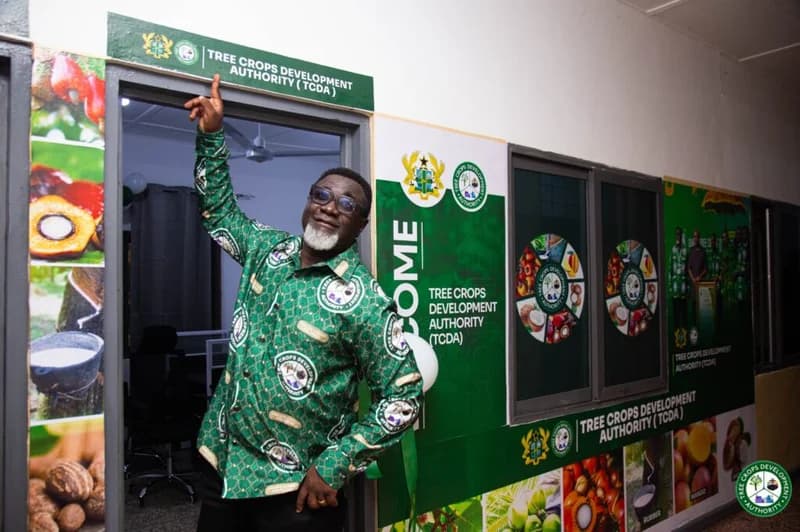
In tandem with these financial gains, the Tree Crops Development Authority (TCDA) is decentralizing its operations to better serve local farmers. TCDA CEO Dr. Andy Osei Okrah, alongside Bono Regional Minister Joseph A. Akwaboa, recently commissioned a new regional office in Sunyani. This office is designed to bring regulatory services, including licensing and compliance monitoring, closer to cashew producers and other stakeholders in the tree crops value chain. Dr. Okrah expressed his gratitude to President John Mahama for his administration's continued support in strengthening the TCDA’s mission to boost agricultural productivity and market access across the regions.
Export diversification is also seeing a boost through a new partnership between Northern-Savanna Crops and Tubers Limited and Complete Farmer Limited. This collaboration aims to cultivate over 500 acres of organic white sesame in the Upper East Region for international markets. Northern-Savanna, a woman-owned enterprise, plans to establish a comprehensive organic crop enclave by 2027, utilizing up to 10,000 acres of farmland. By combining agricultural technology with market expertise, the partnership seeks to create sustainable wealth for rural communities and enhance Ghana’s footprint in the global organic food market.
Further supporting the sector’s growth, the Norwegian government has committed €3 million to the Making Agrifood Markets Accessible (MAMA) programme. This initiative targets 10,000 smallholder soybean farmers, with a specific focus on women’s empowerment and the creation of 20,000 jobs. Led by IDH in collaboration with AGRA and IITA, the programme aims to bridge the gap between farmers and high-value buyers. Collectively, these developments in cocoa financing, tree crop regulation, and organic exports signal a robust move toward a more self-sufficient, technology-driven, and inclusive agricultural economy for Ghana.
Related topic
John Mahama: Latest News & Updates →

