••
Ghana Audit Service to Launch Recommendation Tracker Amid GH"100 Billion Financial Loss Crisis
•2 min read•19 sources
The Ghana Audit Service has announced the upcoming launch of an internal online tracker in October 2026 to monitor the implementation of audit recommendations and financial recoveries. Auditor-General Dr. Pamela Graham revealed that while the service has recovered GH₵17.6 billion and saved the state GH₵11.7 billion through its activities, a significant GH₵280.5 million in surcharges remains unpaid. Professor Francis Dodoo, a Presidential Advisor, highlighted a staggering GH₵100 billion lost to financial irregularities over the past six years, urging the service to utilize its constitutional powers of disallowance and surcharge more aggressively to deter future misappropriation.
This push for accountability coincides with intensified enforcement actions by the Economic and Organised Crime Office (EOCO). The office recently froze the assets of Dennis Miracles Aboagye, a prominent member of the New Patriotic Party (NPP), including five bank accounts and 17 properties, following an investigation into the alleged misappropriation of GH₵55 million. Meanwhile, legal disputes have flared within Parliament, with Akwatia MP Bernard Bediako Baidoo reiterating accusations against Manhyia South MP Nana Agyei Baffour Awuah. Conversely, the Attorney-General’s decision in July 2025 to discontinue criminal proceedings against Dr. Kwabena Duffuor regarding the GH₵5.7 billion UniBank collapse has sparked public debate over whether judicial expediency is compromising systemic accountability.
To complement these institutional efforts, the Mahama administration is calling for a more robust media landscape. Marietta Agyeiwaa Brew, Legal Advisor to President John Mahama, urged journalists at a 2026 stakeholders’ conference to strengthen fact-checking and utilize the Right to Information (RTI) Act to combat —information disorder.— She emphasized that in a digital age, the media’s responsibility to verify information is critical to maintaining public trust and ensuring that public institutions remain accountable to the citizenry. Deputy Presidential Spokesperson Shamima Muslim added that the government remains committed to the timely release of information to support fair media scrutiny.
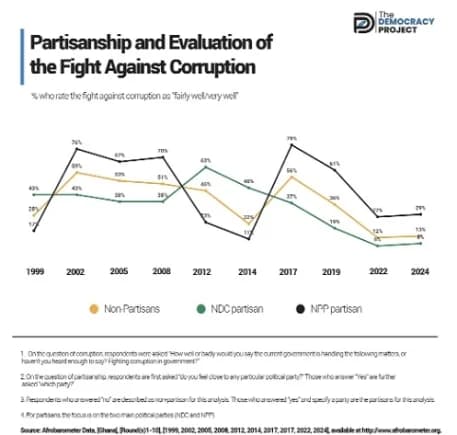
Despite these advancements, experts warn of a lingering —institutional dilemma— where partisan narratives often complicate anti-corruption efforts. While the Audit Service moves toward AI-enabled auditing and digital tracking, the political nature of appointments within the Attorney-General’s office continues to raise questions about the independence of high-profile prosecutions. As the country moves toward the 2026 audit cycle, the success of these transparency initiatives will depend on a consensus across political lines and the ability of the Audit Service to impose stricter penalties that outweigh the potential gains of financial misappropriation.
Related topic
NPP (New Patriotic Party): Latest News →

