••
Ghana Researchers Pilot AI-Powered SporeSmart Technology for Real-Time Crop Disease Detection
•2 min read•3 sources
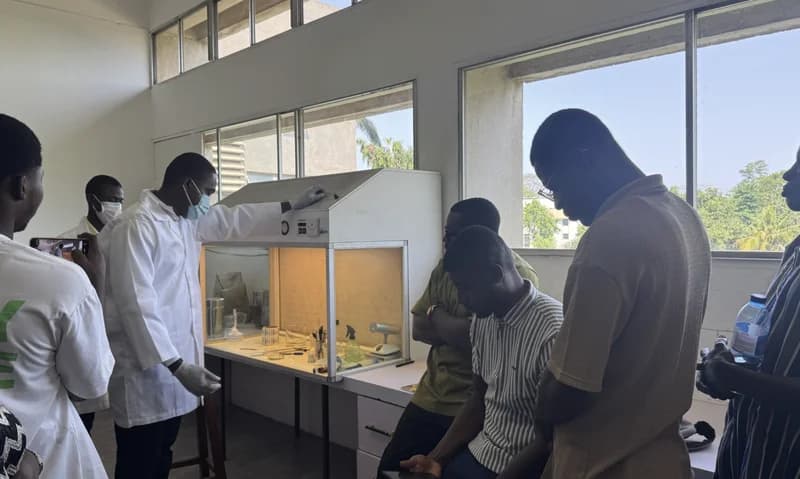
The CSIR-Crops Research Institute (CSIR-CRI) has launched a pioneering pilot project integrating Artificial Intelligence (AI) and specialized sensor technology to detect crop diseases in real-time. Utilizing the "SporeSmart" device, researchers aim to revolutionize how Ghanaian farmers manage fungal threats, particularly Fusarium spp., which causes significant damage to staple crops such as maize, rice, and tomatoes. Supported by funding from UK Innovate and collaborations with experts from the United Kingdom and Brazil, this initiative represents a major step toward modernizing Ghana’s agricultural surveillance and ensuring long-term food security.
At the heart of this innovation are five SmartSpore collectors currently deployed in agricultural fields. According to Dr. Kwesi Atta Aidoo Snr, these devices are designed to capture fungal spores directly from the environment for laboratory analysis, allowing for the early identification of potential outbreaks before they devastate harvests. During the pilot phase, which spans from late 2025 into early 2026, the project has already captured over 2,000 spore images, demonstrating the technology's capacity for high-volume data collection and its potential to provide a granular view of pathogen activity in the field.
The implications for sustainable farming are profound. By identifying diseases at their onset, the SporeSmart technology enables farmers to apply targeted interventions rather than relying on broad-spectrum pesticide applications. CSIR-CRI Deputy Director Dr. Patricia Acheampong emphasized that this approach aligns with global climate-smart agriculture goals, reducing environmental chemical loads while simultaneously lowering production costs for farmers. Luke Murell, the Project Lead, further noted that while the technology is promising, its successful nationwide implementation will depend on robust financing structures and comprehensive training for local agricultural officers.
Looking ahead, the project team envisions a future where this technology is commercially available to the broader farming community and integrated into government extension services. By transitioning from reactive to proactive disease management, the initiative seeks to bolster farmers' incomes and enhance the safety and resilience of Ghana's food supply chain. As the pilot continues to yield data, researchers remain focused on refining the AI algorithms to ensure the system is as accurate and accessible as possible for real-world agricultural applications.
This story touches markets covered on Anansi Intelligence ↗.
More from technology
Continue exploring similar stories


