••
Ghanaian Academic Leaders Demand Science-Driven Policies to Combat Climate Change and Urban Flooding
•3 min read•6 sources
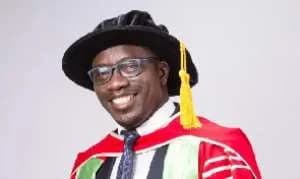
Academic leaders and humanitarian experts across Ghana’s top institutions are calling for an urgent transition toward science-driven policies and stronger regional collaboration to address the country's escalating climate and environmental challenges. In recent addresses at the University of Cape Coast (UCC), the University of Environment and Sustainable Development (UESD), and the University of Education, Winneba (UEW), prominent scholars warned that the intersection of poor urban planning, political polarization, and biodiversity loss poses a significant threat to the nation’s sustainable development goals.
Professor Edward Wiafe Debrah, Pro-Vice-Chancellor of UESD, underscored during an inaugural lecture that Africa’s biodiversity is at a crossroads, with habitat destruction and pollution threatening food security and public health. He advocated for ecosystem protection to become a national development priority, emphasizing that conservation efforts must be rooted in scientific evidence rather than political convenience. This call for science-based action is being mirrored on the ground at UCC, where Vice-Chancellor Professor William Aheto has intensified campus-wide measures—including dredging waterways and desilting drains—to mitigate the impact of heavy rainfall that has recently caused significant inundation.
Complementing these environmental warnings, Dr. Ebenezer Ankomah Gyamera, a Senior Lecturer at UCC and engineering expert, issued a stern caution against the proliferation of residential construction on unsuitable land. He criticized the current practice of building in wetlands and floodplains that require extensive laterite filling, arguing that such developments are fundamentally unsafe and indicative of a failure in land-use management. Dr. Gyamera urged developers to engage certified professionals and called for stricter enforcement of building regulations by governmental bodies to prevent recurrent structural failures and flood-related disasters.
On the policy front, Professor Ransford Gyampo of UEW highlighted that even the most robust scientific solutions face failure in a politically polarized society. Speaking at the 8th Biennial Social Science Conference, he argued that sustainable development is unattainable when policy discontinuity prevails and urged universities to foster social cohesion and public value. This need for systemic resilience was echoed by Sophia Stanger, Project Manager of the HAWA programme, who called for stronger climate-responsive humanitarian systems. She emphasized that as extreme weather becomes the new norm, West African nations must deepen regional partnerships and invest in capacity development to better prepare for environmental emergencies.
Collectively, these experts suggest that Ghana’s path to climate resilience depends on a multi-pronged approach: rigorous engineering standards, community-centered conservation, and a unified political commitment to long-term goals. By bridging the gap between academic research and practical policy implementation, the speakers believe Ghana can better safeguard its ecosystems and urban centers against the growing threats of the 21st century.
This story touches markets covered on Anansi Intelligence ↗.
More from education
Continue exploring similar stories


