••
Ghana to host security coalition with Alliance of Sahel States
•2 min read•1 source
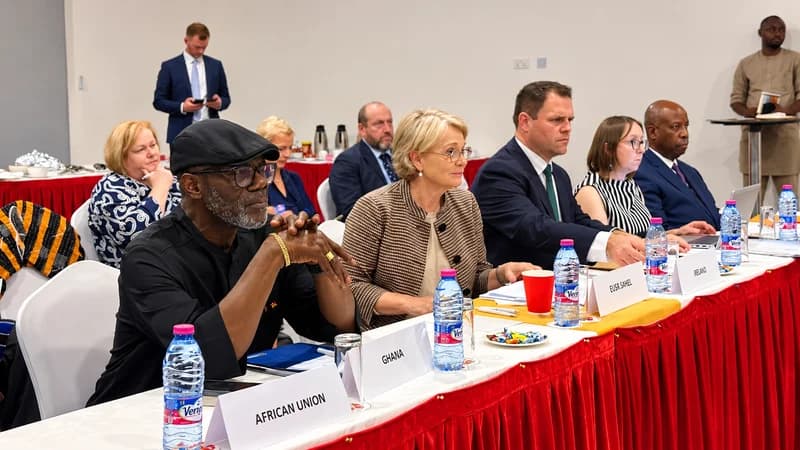
Ghana’s Special Envoy, Mr. Gbevlo-Lartey, has announced plans for the country to host a 'Coalition of the Willing' aimed at reinforcing security cooperation with the Alliance of Sahel States (AES). This initiative comes as a strategic response to the regional instability following the withdrawal of Mali, Burkina Faso, and Niger from the Economic Community of West African States (ECOWAS) in January 2025. The engagement is designed to bridge the gap between the sub-regional bloc and the AES to bolster collective security against growing threats.
The announcement was made during a high-level meeting co-chaired by Ghana and the European Union (EU). The discussions centered on collective international action to address escalating humanitarian crises, insecurity, and irregular migration within the Sahel region. Mr. Gbevlo-Lartey emphasized that despite the geopolitical shifts caused by the AES's exit from ECOWAS, Ghana remains committed to maintaining and strengthening partnerships with these nations. He highlighted that the 'Coalition of the Willing' will serve as a platform for nations to coordinate efforts in tackling terrorism and other related security threats that transcend national borders.
The withdrawal of the AES countries from ECOWAS last year created a significant challenge for the regional security architecture, particularly in the fight against jihadist insurgencies. By positioning itself as a facilitator of this new coalition, Ghana aims to ensure that intelligence sharing and joint operations continue despite formal diplomatic fractures. The collaboration with the EU underscores the international dimension of the Sahelian crisis, suggesting that regional solutions must be supported by global partnerships to be effective.
As Ghana prepares to host this security coalition, the government is advocating for a more unified front among West African nations. Mr. Gbevlo-Lartey noted that ongoing cooperation with AES countries is essential for long-term stability in West Africa. The next steps for the initiative will involve formalizing the structure of the coalition and defining the specific roles of participating member states and international partners in addressing the complex socio-political and security landscape of the Sahel region.
